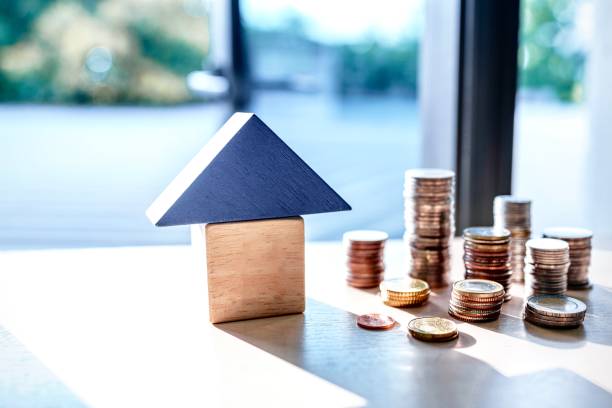
You already own a home, so you think you know the drill. But when you go after a second mortgage or a home equity line of credit, the closing costs can hit you in a way that feels totally unfair. Here’s the plain truth: that money doesn’t just disappear. It goes to people who verify your house is worth what you say it is, to the company that makes sure nobody else has a claim on your home, and to the lender who does the paperwork. None of that is free, and a lot of homeowners are shocked at how much it adds up to.
Let’s start with the appraisal. On a first mortgage, you just bought the place, so the sale price tells everybody what it’s worth. But on a second mortgage, years have gone by. Your house could have doubled in value, or maybe the neighborhood went sideways. The lender needs a professional opinion, and that appraiser charges anywhere from four hundred to a thousand bucks. You can’t skip it. You also can’t just use a Zillow estimate, no matter how convenient that would be. The lender wants someone who actually walks through your rooms and checks out the foundation.
Then there’s the title search and title insurance. On your first mortgage, the title company already checked that the person who sold you the house really had the right to sell it. But for a second mortgage, the lender wants to make sure no other liens or judgments have popped up since then. Maybe you had a contractor file a mechanic’s lien because you argued about a roof repair. Maybe a credit card company got a court judgment against you. That stuff shows up, and the title company has to dig through public records to find it. That costs a few hundred dollars. And title insurance for the second mortgage? Another few hundred. It protects the lender if something sneaky comes up later, not you.
Now the big one: origination fees. This is the lender’s cut for doing the work. On a first mortgage, you might negotiate these down or get the builder to pay them. On a second mortgage, lenders often see you as a slightly riskier customer because you already owe money on the house. So they might charge one or two percent of the loan amount just to say yes. On a fifty-thousand-dollar HELOC, that’s five hundred to a thousand bucks in origination fees alone. Add that to your appraisal and title costs, and you’re looking at fifteen hundred to three thousand dollars, sometimes more, just to borrow a chunk of the equity you’ve already built.
Don’t forget the smaller stuff. The credit report fee, maybe thirty bucks. The document preparation fee, which might be a hundred and fifty dollars for something that’s clearly just typing. The notary fee if you’re signing papers at home or in a bank lobby. The recording fee that the county charges to make the deal official. And here’s a sneaky one: if you’re opening a HELOC, some lenders charge an annual fee, like fifty to a hundred bucks, every single year, for as long as you keep the line open. That’s not a closing cost upfront, but it’s baked into the relationship.
So what can you do about all this? First, ask for a Good Faith Estimate, which is now called a Loan Estimate, before you sign anything. Every lender has to give you one. Look at every line item. Question anything that seems vague. Second, shop around. Two different lenders can quote wildly different closing costs for the exact same loan. One might charge a fat origination fee, while another makes up for it with a slightly higher interest rate but no upfront fee. You need to do that math carefully. Third, negotiate. If you have decent credit and solid equity, you have leverage. Ask the lender to waive the application fee. Ask if they’ll discount the origination fee. The worst they can say is no.
Also, look into the difference between a fixed second mortgage and a HELOC. A home equity loan often has predictable, one-time closing costs. A HELOC might have lower upfront costs but more fees later, including that annual fee and sometimes a termination fee when you close the line. Don’t just pick based on the monthly payment. Add up every single dollar you’re paying over the first few years.
Finally, remember that some lenders advertise “no closing costs” on second mortgages. Sounds great, right? But that usually means you’re paying a higher interest rate instead. Over a ten-year payoff, that higher rate can cost you far more than the upfront fees you avoided. Don’t fall for the shiny trap. Do the long-term numbers.
Bottom line: closing costs on a second mortgage aren’t some mysterious penalty. They pay for real services. But that doesn’t mean you have to accept the first number thrown at you. Treat it like buying a car. Walk in knowing the costs, ask for a breakdown, and be willing to walk away if the fees don’t make sense. Your equity is your money. Don’t hand it over to someone just because they have a loan application.