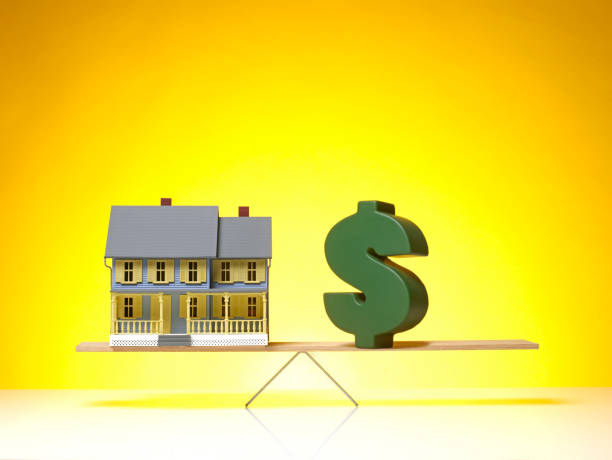
When you have owned your home for a while, you build up something called equity. Equity is simply the part of your home you actually own. If your house is worth four hundred thousand dollars and you still owe two hundred thousand on your mortgage, you have two hundred thousand in equity. That money is not just sitting in a bank account, but it is still yours. You can borrow against it. The two most common ways to do this are a home equity loan and a home equity line of credit, or HELOC. While they sound similar, they work very differently. The main thing that sets them apart is how you get your hands on the money.
A home equity loan is exactly what it sounds like. It is a loan. You get a lump sum of cash all at once. This is a great option if you have a specific project with a known cost. Maybe you need to replace your entire roof, and the contractor gave you a firm price of fifteen thousand dollars. With a home equity loan, you borrow the full fifteen thousand upfront. You start paying it back right away in fixed monthly payments. The interest rate is usually fixed too, which means your payment never changes for the life of the loan. This gives you predictability. You know exactly what you owe and for how long. Think of it like a second mortgage. In fact, many people call it just that. It sits behind your first mortgage, and you pay on both every month until the loan is paid off. This works well for big, one-time expenses where you need the cash now and want a steady payment plan.
A HELOC is very different. HELOC stands for Home Equity Line of Credit. Instead of getting all the money at once, a HELOC works more like a credit card. The bank approves you for a certain amount, say fifty thousand dollars, based on your equity. But you do not have to take that money all at once. You can take a little bit, use it, pay it back, and then take more. This is called a line of credit. During what is called the draw period, which often lasts about ten years, you can borrow money whenever you need it. You only pay interest on the money you have actually taken out, not on the full approved amount. If you take out ten thousand and leave the rest sitting there, you only owe interest on that ten thousand. After the draw period ends, you enter the repayment period. At that point, you can no longer borrow more, and you have to start paying back the balance, usually over the next twenty years.
The HELOC is ideal for ongoing expenses where you are not sure of the total cost. A classic example is a home renovation project that happens in stages. Maybe you are remodeling the kitchen and then plan to do the bathroom next year. With a HELOC, you can borrow to pay for the kitchen, pay it down, and then borrow again for the bathroom later. You do not pay interest on money you are not using. Another good use for a HELOC is an emergency fund. Some homeowners keep a HELOC open just in case they face a big, unexpected expense like a major plumbing repair or a medical bill. The flexibility is the main advantage. However, that flexibility comes with a tradeoff. The interest rate on a HELOC is usually variable. That means your rate can go up or down over time based on the economy. If interest rates rise, your monthly payments can rise too. That makes it harder to budget for the long term.
Which one is better for you depends entirely on your situation. If you have a single large project with a fixed cost, and you want peace of mind with a set payment, the home equity loan is the safer bet. You lock in your rate, and you know when the debt will be gone. If you have multiple projects or uncertain expenses, or if you like the idea of only paying for what you use, the HELOC gives you more control. Just remember that the HELOC requires discipline. It is easy to keep borrowing because the minimum payments are often low during the draw period. Some people fall into the trap of only paying the interest each month. That means the principal never goes down, and the debt can hang around for a long time.
Both of these options use your home as collateral. That is a serious consideration. If you fail to make the payments, the lender can take your house. You should only borrow against your equity for things that truly matter, like home improvements that increase your property value, debt consolidation at a lower rate, or major life expenses you cannot avoid. Do not use a HELOC or home equity loan for vacations, normal spending, or things that lose value quickly. It is your home on the line.
Before you decide, look at your numbers carefully. Know how much equity you have. Lenders usually want you to keep at least fifteen or twenty percent equity in your home after the loan. Look at the fees too. Home equity loans often have closing costs similar to a first mortgage. HELOCs might have lower upfront fees but could come with annual fees or inactivity fees. Compare the interest rates and the terms. A fixed rate is simple. A variable rate can start low but be ready to change. Think about your future plans. If you plan to sell your home in a few years, a HELOC might be simpler to pay off at closing. If you plan to stay put, a fixed loan offers stability.
At the end of the day, the choice comes down to whether you want a single check now or a flexible pool of money you can dip into over time. Both can be smart tools when used wisely. Both can cause trouble if used carelessly. Take your time, talk to a few lenders, and choose the structure that fits your life.