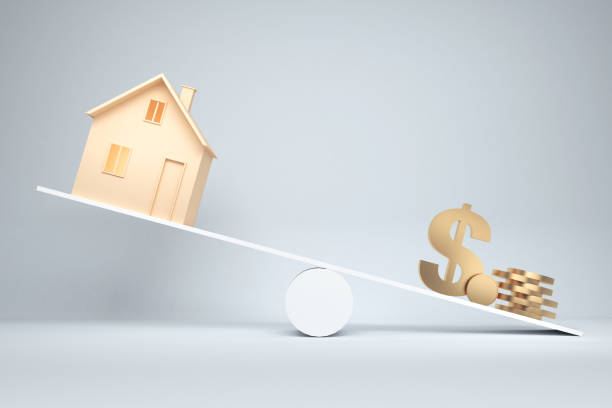
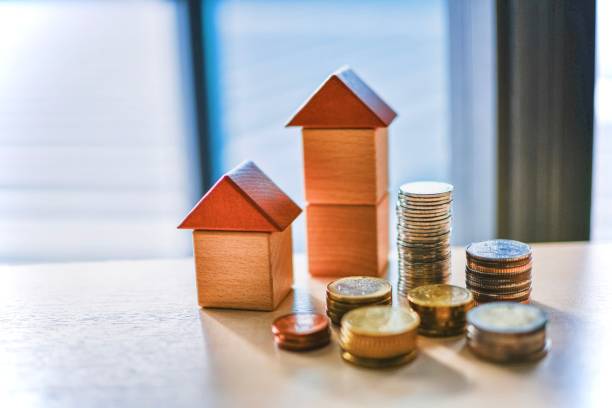
 When you already have a first mortgage on your home, taking out a second mortgage might seem like a quick way to get cash for home improvements, paying off credit cards, or covering an emergency. But before you sign on the dotted line, it is important to understand how a second mortgage changes your overall debt load. This new loan does not replace your first mortgage—it stacks on top of it. That means your total monthly payments go up, your risk increases, and your ability to borrow money for other things can change.A second mortgage is a separate loan that uses your home as collateral, just like your first mortgage did. The most common types are a home equity loan, which gives you a lump sum, and a home equity line of credit, which works like a credit card you can draw from. In either case, the lender records a second lien on your property. If you ever fall behind on payments, the first mortgage lender gets paid first from the sale of your home, and the second mortgage lender gets whatever is left. Because the second lender takes more risk, these loans usually have higher interest rates than your first mortgage.The biggest impact on your debt load is the obvious one: you now have two monthly payments instead of one. For example, if your first mortgage payment is $1,200 a month and you take out a second mortgage with a $300 monthly payment, your housing debt jumps to $1,500. That extra $300 has to come from somewhere in your budget. If your income stays the same, you have less money for groceries, transportation, or savings. Over time, this can make it harder to handle unexpected expenses like a car repair or a medical bill.Beyond the monthly payment, the total amount you owe increases. Your first mortgage might be $200,000, and a second mortgage might add $40,000, bringing your total mortgage debt to $240,000. That means you owe more money than the original purchase price of your home, unless your home has gone up in value. If home values drop, you could end up owing more than your home is worth. That situation is called being “underwater,” and it can make it very difficult to sell your home or refinance in the future.Interest is another big factor. Because second mortgages usually have higher rates, a larger portion of your monthly payment goes toward interest instead of paying down the principal. With a first mortgage, you gradually build equity as you pay it off. A second mortgage slows that process down because you are paying interest on a smaller loan but at a higher rate. Over the life of the loan, you may end up paying thousands of dollars in extra interest, which adds to your total debt cost.Your debt-to-income ratio, often called DTI, also takes a hit. Lenders use this number to decide if you can afford more credit. It compares your total monthly debt payments to your gross monthly income. When you add a second mortgage payment, your DTI goes up. If it climbs too high, you may have trouble getting approved for a car loan, a credit card, or even a refinance on your first mortgage later on. A high DTI can also affect your credit score, especially if the new payment makes it harder to keep up with all your bills.There is also the risk of default. If you lose your job or face a big unexpected expense, having two mortgage payments makes it more likely you will miss a payment. Missing payments hurts your credit score and can eventually lead to foreclosure. With two lenders, the foreclosure process can be more complicated, and you may have fewer options to negotiate a modification.On the positive side, a second mortgage can sometimes help you reduce your overall debt if you use it to pay off high-interest credit cards or personal loans. For example, if you have $10,000 in credit card debt with 18% interest, and you use a second mortgage at 7% to pay it off, you lower your monthly interest cost. But you still owe the same $10,000—it is just now secured by your home. If you cannot pay the second mortgage, you risk losing your house. That trade-off is serious.Another thing to keep in mind is closing costs. Getting a second mortgage usually involves fees like appraisal, application, and origination charges. These fees add to your debt load because they are often rolled into the loan amount, meaning you pay interest on those fees for years.In short, a second mortgage increases your overall debt in several ways: a higher monthly payment, a larger total loan balance, more interest over time, a worse debt-to-income ratio, and greater risk of financial trouble. It can be a useful tool for consolidating high-interest debt or making a valuable home improvement, but it is not free money. Before you take out a second mortgage, carefully look at your budget, consider how it will affect your monthly cash flow, and weigh the potential long-term costs. The extra loan might solve a short-term problem, but it will change your financial picture for many years to come.
Yes. By law, your lender must provide you with a Loan Estimate within three business days of receiving your application, which details the expected closing costs. Then, at least three business days before closing, you will receive a Closing Disclosure with the final costs.
In a normal, upward-sloping yield curve environment, shorter terms have lower rates. However, during certain economic conditions (like when the Federal Reserve is aggressively raising rates to combat inflation), the yield curve can “invert.“ This means short-term borrowing costs become higher than long-term costs. While this phenomenon is more common in bonds, it can occasionally trickle into mortgage pricing, making short-term loans like 5/1 ARMs more expensive than 30-year fixed rates.
The 15-year mortgage saves you a substantial amount in total interest over the life of the loan. Using the $400,000 example at 6.5%, the total interest paid on a 30-year mortgage would be approximately $510,000. For the 15-year mortgage, the total interest paid would only be about $227,000—a savings of over $283,000.
A conventional loan is a mortgage that is not insured or guaranteed by a government agency (like the FHA, VA, or USDA). They typically require a higher credit score and a larger down payment (often 3%-20%) compared to government-backed loans and are conforming if they meet loan limits set by Fannie Mae and Freddie Mac.
Paying off a collection account is generally a good practice and may be required by some lenders for mortgage approval. However, the impact on your score can vary. Newer scoring models ignore paid collections, which can help. For the best mortgage qualification, it’s often advised to pay off collections, but be sure to get a “pay for delete” agreement in writing if possible, where the collector agrees to remove the account from your report entirely.