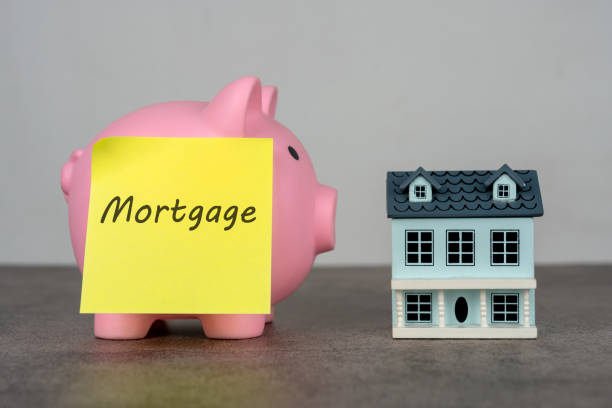
 When you already have a home loan, taking out another mortgage on the same property might seem like a smart way to get cash for a renovation, college tuition, or paying off credit cards. Lenders often call these “subsequent mortgages” – basically any new loan that sits behind your original mortgage. But before you sign, it is important to understand exactly how that second loan changes your total debt. Every dollar you borrow adds to your monthly payments, extends the time you owe money, and increases the risk that you could lose your home if things go wrong.Your first mortgage is the biggest loan you will ever have. Adding a second one means you now have two separate monthly payments instead of one. Even if the second loan has a lower interest rate than a credit card, it is still extra money leaving your bank account each month. That reduces the cash you have for everyday expenses, savings, and emergencies. Many homeowners underestimate how tight their budget becomes once that second payment is due. A $300 monthly payment on a $30,000 second mortgage might not sound like much, but over the year that is $3,600 less you can spend on food, car repairs, or unexpected medical bills.Beyond the monthly payment, the total interest you pay over the life of both loans is a hidden cost. Your first mortgage is already costing you interest, sometimes for 30 years. When you add a second mortgage, you are starting a whole new interest clock. Second mortgages often come with higher interest rates than your first loan because the lender takes on more risk – if you stop paying, the first mortgage gets paid first from the sale of your home, and the second lender might get nothing. That higher rate means you pay more for every dollar you borrow. If you take out a home equity loan at 8% interest while your first mortgage is at 6%, you are paying a premium for that additional debt. Over a 15-year term, those extra percentage points can add thousands of dollars in interest.Another big factor is your debt-to-income ratio, or DTI. Lenders look at how much of your monthly income goes to debt payments. When you add a second mortgage, your DTI goes up. That can make it harder to get new credit later, like a car loan or a credit card with a good limit. It can also be a problem if you ever want to refinance your first mortgage. If your DTI is too high, you may not qualify for a lower rate. So taking on a second mortgage today could lock you out of savings opportunities tomorrow.The risk of default is real. If you lose your job or face a big unexpected expense, you now have two mortgage payments to cover instead of one. Missing just a few payments on either loan can trigger foreclosure. With a first mortgage alone, you have some room to negotiate with your lender if you hit hard times. With a second mortgage in place, the situation becomes more complicated. The second lender can also start foreclosure proceedings independently. That means two separate creditors who can take your home. Many people who took out second mortgages during the housing boom in the mid-2000s ended up owing more than their home was worth – a situation called being underwater. When that happens, you cannot sell the house without bringing extra cash to closing, and you cannot refinance because no lender will give you a new loan for more than the property is worth.Your home equity is the cushion between what you owe and what your house is worth. Every subsequent mortgage eats into that cushion. If your home is worth $300,000 and you owe $200,000 on your first mortgage, you have $100,000 in equity. Taking out a $30,000 second mortgage drops your equity to $70,000. That is a smaller safety net. If home prices fall even a little, you could end up with negative equity. That puts you in a very vulnerable position. You cannot move without taking a loss, and you have no equity left to borrow from in a true emergency.Finally, think about the long term. Your first mortgage will eventually be paid off, but a second mortgage might have a different term. Many home equity loans are 10 or 15 years. So you could be making payments on the second loan long after your first loan is gone. That means you are still in debt when you thought you would be free. It also means you will be older and possibly on a fixed income when that payment is due. Planning for retirement becomes harder when you are still carrying mortgage debt.In short, a second mortgage adds to your overall debt load in ways that go beyond just the dollar amount. It changes your monthly budget, increases your interest costs, raises your risk of foreclosure, and shrinks your home equity. It can also limit your future borrowing ability and push back your debt-free date. Before you take that step, make sure you have a solid plan to handle the extra payments, and consider whether the cash you get is worth the long-term cost.
Smaller, consistent monthly payments often provide a slightly greater interest savings over time because the principal is reduced continuously. However, a lump-sum payment (e.g., from a tax refund or bonus) is also highly effective and can be easier to manage for some borrowers.
Discount points are optional fees you pay to lower your interest rate. Origination points are fees charged by the lender to cover the cost of processing and underwriting the loan. Origination points do not lower your interest rate.
The entire process is usually quick, often taking between 30 to 45 days from the time you submit your request and payment until your new monthly payment takes effect.
Fixed-Rate: Offers maximum payment stability. Your principal and interest payment remains unchanged for the entire 15, 20, or 30-year term, making long-term budgeting predictable.
Adjustable-Rate: Offers initial payment stability, followed by potential variability. Payments are fixed during the initial period (e.g., 5, 7, or 10 years) but can increase or decrease after each adjustment period when the rate changes.
Refinancing can be a powerful tool, but it’s not always the right move. You should consider it if:
Interest rates are at least 0.5% to 1% lower than your current rate.
Your credit score has improved significantly since you got your original loan.
You want to switch from an adjustable-rate mortgage (ARM) to a stable fixed-rate mortgage.
You have enough equity to remove Private Mortgage Insurance (PMI).
Always calculate the break-even point (how long it will take for the monthly savings to cover the closing costs) before deciding.