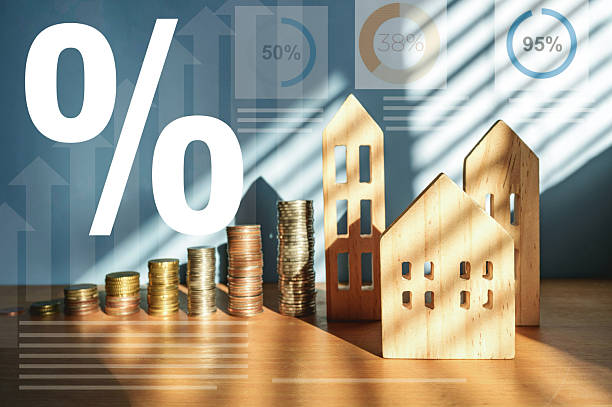
 You probably hear about the Federal Reserve raising or lowering interest rates on the news, and you might wonder what that has to do with the mortgage payment you write every month. The connection is not always direct, but understanding it can help you make smarter decisions about when to buy a home or refinance. Let’s break down how this works in simple terms.The Federal Reserve, often called the Fed, is the central bank of the United States. Its main job is to keep the economy stable. When inflation is too high, the Fed raises its short-term interest rate, which is called the federal funds rate. This is the rate that banks charge each other for overnight loans. When the Fed wants to encourage borrowing and spending, it lowers that rate. Now, you might think your mortgage rate is set by the Fed directly, but that is not exactly true. The Fed does not set mortgage rates. Instead, its actions ripple through the financial system and eventually affect the rates you see at your local bank or online lender.Mortgage rates are most closely tied to long-term interest rates, particularly the yield on ten-year Treasury bonds. Think of a Treasury bond as a loan you give to the U.S. government. When investors are worried about the economy, they buy more Treasury bonds because they are safe. This demand pushes the bond’s price up and its yield down. When the economy is strong and inflation is rising, investors demand higher yields to compensate for the risk that their money will lose value. Mortgage lenders use these bond yields as a guide. If the ten-year Treasury yield goes up, lenders tend to raise mortgage rates. If it goes down, mortgage rates often fall.So how does the Fed get involved? When the Fed raises its short-term rate, it makes borrowing more expensive for banks. Banks then pass that cost on to consumers and businesses by raising the rates on credit cards, car loans, and other short-term loans. This slows down spending and helps cool the economy. But the effect on mortgage rates is more complicated. When the Fed raises rates, it signals that it is fighting inflation. This can make investors think that long-term inflation will be lower in the future, which might actually push long-term bond yields down in the short run. However, the opposite often happens. If the Fed is raising rates because inflation is already high, investors start to worry that inflation will stay high for a long time. They demand higher yields on ten-year bonds, which pushes mortgage rates up.In plain language, when the Fed starts hiking rates aggressively, you can expect mortgage rates to climb, too. That is what happened in 2022 and 2023. The Fed raised its rate several times to fight inflation, and mortgage rates went from around three percent to over seven percent. Many homeowners who had locked in low rates earlier suddenly found that refinancing was no longer a good deal, and people looking to buy a home faced much higher monthly payments. On the flip side, when the Fed cuts rates, mortgage rates usually fall over time. Lower short-term rates make it cheaper for banks to borrow, and that can eventually filter into lower mortgage rates. But the drop might not happen instantly. Mortgage rates are forward-looking. They reflect what lenders and investors expect the economy to do in the years ahead.One important thing to remember is that your personal mortgage rate is also driven by your credit score, the size of your down payment, and the type of loan you choose. The Fed’s moves affect the overall market, but your individual rate may be higher or lower than the average. For example, a borrower with an excellent credit score and a twenty percent down payment will get a better rate than someone with a lower score and a small down payment, even when the Fed is keeping rates steady.Another key point is that the Fed influences adjustable-rate mortgages, or ARMs, more directly than fixed-rate loans. An ARM has a rate that changes after an initial fixed period. That rate is often tied to a short-term index like the Secured Overnight Financing Rate, which moves closely with the Fed’s rate. So if you have an ARM and the Fed raises rates, your monthly payment could go up when the adjustment period arrives. Fixed-rate mortgages are not directly tied to the Fed’s rate, but they are still sensitive to the overall interest rate environment.For a regular homeowner, the best thing you can do is pay attention to what the Fed says about inflation and the economy. When the Fed signals that it plans to raise rates in the future, mortgage rates often start rising before the actual hike happens. That is your cue to lock in a rate if you are in the middle of buying a home or refinancing. When the Fed signals cuts, you might want to wait a little longer to see if rates drop further. But timing the market is tricky, and it is usually smarter to focus on your own financial situation. If you can afford the monthly payment at today’s rates, and you plan to stay in the home for several years, then a good rate today is better than a potentially better rate that might never come.In short, the Federal Reserve does not control your mortgage rate, but its decisions are the biggest force that shapes where rates go. When the Fed raises its short-term rate to fight inflation, mortgage rates generally go up. When it cuts rates to help the economy, mortgage rates tend to fall over time. Understanding this basic relationship helps you make sense of the headline news and gives you a clearer picture of what to expect when you shop for a home loan.
Recasting: You make a large lump-sum payment toward the principal, and the lender re-amortizes your loan based on the new, lower balance. Your interest rate and term stay the same, but your monthly payment is reduced. There is usually a small fee. Refinancing: You replace your existing mortgage with a completely new loan, often to secure a lower interest rate or change the loan term. This involves closing costs and a full credit check.
Lenders face two primary risks over time: default risk (the borrower stops paying) and interest rate risk (market rates rise, making the lender’s fixed-rate loan less profitable). A shorter loan term reduces the lender’s exposure to both of these risks, so they offer a lower rate as an incentive for you to borrow for a shorter period.
Our primary methods are email and phone calls. Email is perfect for sending documents, providing detailed updates, and creating a written record. Phone calls are ideal for complex discussions, answering immediate questions, and ensuring we fully understand your unique situation. We can also utilize secure text messaging for quick, time-sensitive alerts.
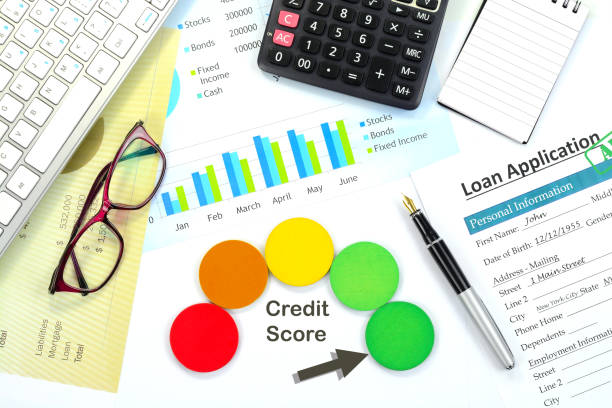
The cost can be substantial. On a $300,000, 30-year fixed-rate mortgage, a borrower with a “Fair” score might get a rate of 7.5%, while a borrower with an “Excellent” score might get 6.25%. The borrower with the lower score would pay over $100,000 more in interest over the 30-year term. This highlights the immense financial value of a good credit score.
For a primary residence, HOA fees are generally not tax-deductible. However, if you rent out your property, the HOA fees can be deducted as a rental expense. There are also specific cases for home offices where a portion may be deductible; it’s best to consult with a tax professional for your specific situation.