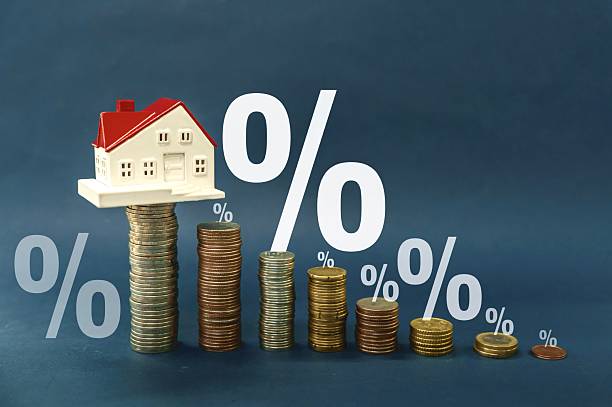
 The quest for homeownership inevitably leads to the pivotal question of mortgage rates. That percentage point, often discussed in anxious whispers or hopeful forecasts, is far from arbitrary. It is a carefully calculated number, a confluence of macroeconomic forces, individual financial standing, and institutional mechanics. Understanding how mortgage rates are determined demystifies a critical component of the housing market and empowers borrowers to navigate it more effectively.At the most fundamental level, mortgage rates are anchored to the broader economic environment, primarily influenced by the monetary policy set by a nation’s central bank, such as the Federal Reserve in the United States. While the Fed does not directly set mortgage rates, it establishes the federal funds rate, which is the interest rate at which banks lend to each other overnight. This benchmark influences the cost of borrowing across the entire economy. When the Fed raises rates to combat inflation, the cost for lenders to obtain money increases, a cost typically passed on to consumers in the form of higher mortgage rates. Conversely, in efforts to stimulate economic activity, the Fed may lower rates, often leading to a decline in mortgage rates. This relationship with central bank policy is why mortgage rates are sensitive to economic data reports and statements from central bank officials.Intertwined with monetary policy is the bond market, specifically the market for mortgage-backed securities (MBS). When a lender originates a mortgage, it often sells that loan on the secondary market to be bundled with other mortgages into an MBS, which is then sold to investors like pension funds or insurance companies. The yield that investors demand to purchase these securities directly influences the rates lenders must offer to make the loans profitable when packaged and sold. The most common benchmark for long-term interest rates is the 10-year U.S. Treasury yield. Mortgage rates generally move in the same direction as this yield, maintaining a spread above it to account for the additional risk and longer duration of home loans compared to government bonds. When investors are worried about economic uncertainty, they may flock to the safety of Treasury bonds, driving their yields down and, often, pulling mortgage rates lower with them.Beyond these sweeping economic tides, mortgage rates are finely tuned at the individual level through the lens of risk. Lenders assess the risk of a borrower defaulting on the loan, and price the interest rate accordingly. This is where personal financial details become paramount. Credit score is a primary determinant; a higher score signals responsible credit management and results in a lower interest rate, while a lower score attracts a higher rate to offset the perceived risk. The loan-to-value ratio (LTV), which is the mortgage amount compared to the home’s appraised value, is equally critical. A lower LTV, achieved with a larger down payment, represents less risk to the lender and secures a more favorable rate. Furthermore, loan characteristics such as the term (a 15-year loan typically has a lower rate than a 30-year loan), the type (fixed versus adjustable), and whether the loan is conforming (meeting standards for purchase by Fannie Mae and Freddie Mac) or a non-conforming jumbo loan all play defining roles in the final rate offered.In essence, the mortgage rate presented to a homebuyer is the product of a complex equation. It reflects the temperature of the national and global economy through central bank policy and investor sentiment in the bond market. Simultaneously, it is a personalized assessment of the borrower’s financial health and the specific structure of the loan itself. By recognizing these determinants—the macroeconomic currents and the microeconomic details—borrowers can better time their entry into the market, improve their financial profile to qualify for superior terms, and ultimately secure the key to their new home at the most favorable cost possible.
Credit Report: This is your detailed credit history. It’s a report card that lists your accounts, payment history, balances, credit inquiries, and public records (like bankruptcies). Credit Score: This is the numerical grade, calculated based on the information in your credit report. It’s a quick snapshot of your credit risk.
Yes, it is very common for your escrow payment to change. Since it is based on the actual cost of taxes and insurance, any increase in your property tax bill or homeowners insurance premium will result in a higher escrow payment. Your lender will perform an annual escrow analysis to adjust your payment accordingly for the coming year.
The average U.S. household spends $70-$150 per month on combined water and sewer services. This is highly dependent on local rates, the size of your lot (for irrigation), and the number of occupants. Homes in drier climates with extensive landscaping will have significantly higher water bills.
An escrow shortage occurs when there isn’t enough money in the account to cover your tax and insurance bills. This usually happens because one or both of those bills increased. Your lender will typically give you two options: 1) Pay the full shortage amount in a lump sum, or 2) Spread the shortage amount over the next 12 months, which will result in a higher monthly payment.
Your credit score is calculated using the information in your credit reports. The most common model, FICO®, breaks down like this:
Payment History (35%): Your record of on-time payments for credit cards, loans, and other bills.
Amounts Owed / Credit Utilization (30%): The amount of credit you’re using compared to your total available credit limits.
Length of Credit History (15%): The average age of all your credit accounts.
Credit Mix (10%): The variety of credit you have (e.g., credit cards, mortgage, auto loan).
New Credit (10%): How often you apply for and open new credit accounts.