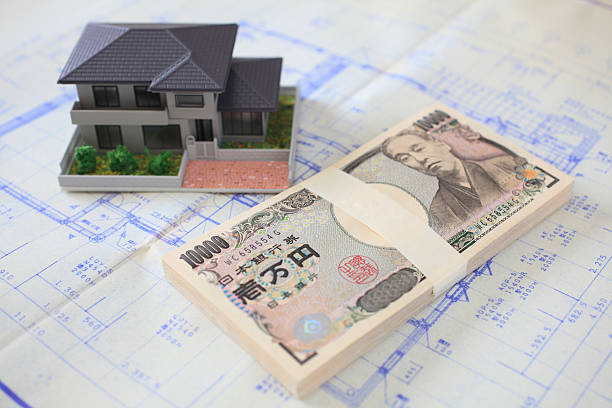
 The dream of transforming a dated kitchen, adding a much-needed bathroom, or finally finishing a basement is a powerful motivator for homeowners. However, the financial reality of renovation costs often requires external financing, leading many to ask: how much can I actually borrow with a renovation loan? The answer is not a single figure but a spectrum, influenced by the loan type, your financial profile, and the projected value of your improved home. Understanding these variables is key to unlocking the funds necessary to turn your vision into reality.At the most fundamental level, your borrowing capacity is anchored by two critical factors: your home’s equity and your debt-to-income ratio. Equity, the portion of your home you truly own, serves as the primary collateral for most renovation loans. Lenders typically allow you to borrow against a percentage of this equity. Concurrently, they will scrutinize your debt-to-income ratio, which compares your monthly debt obligations to your gross monthly income. A lower ratio demonstrates a stronger ability to manage additional loan payments, thereby increasing the amount a lender may be willing to offer. These personal financial metrics form the foundation upon which all loan specifics are built.The specific type of renovation loan you choose then establishes the primary framework for your borrowing limits. A home equity loan or a home equity line of credit are common choices, allowing you to borrow against your existing equity. With these products, you can often access up to 80% to 85% of your home’s current appraised value, minus your remaining mortgage balance. For example, if your home is worth $400,000 and you owe $200,000, you have $200,000 in equity. At an 80% combined loan-to-value limit, the total of your first mortgage and new loan cannot exceed $320,000. Since your first mortgage is $200,000, you could potentially borrow up to $120,000 for renovations.For more extensive projects, a renovation mortgage like the FHA 203(k) or Fannie Mae HomeStyle loan is designed specifically to finance both the purchase and renovation of a property, or a major renovation of an existing home. These loans are based on the projected “as-completed” value of the home after renovations. This is a crucial distinction. A lender will approve an appraisal that estimates the future value once your improvements are finished. You can generally borrow up to 75% to 97% of this future value, depending on the loan program and whether it is for a primary residence or investment property. This allows for significantly larger loan amounts, as it accounts for the value you are adding through the renovation itself.Finally, the scope and nature of your project also play a direct role. Lenders will require detailed contractor bids and plans. The loan must be sufficient to cover all approved hard and soft costs, but they will not lend an unlimited sum. There are often program-specific minimums and maximums; for instance, the FHA 203(k) requires a minimum of $5,000 in repairs and has nationwide lending limits. Furthermore, the improvements must be permanently affixed to the property and add tangible value. You cannot borrow $100,000 for a renovation loan to install luxury, non-structural amenities if the post-renovation appraisal does not support that increased value. The project must be justifiable as a sound investment in the property.In conclusion, determining how much you can borrow for a renovation is a multi-faceted calculation. It begins with a clear assessment of your personal finances and home equity, then moves to selecting the appropriate loan product, which itself has defined parameters based on current or future home value. By consulting with lenders, obtaining detailed project estimates, and understanding how your chosen loan works, you can arrive at a precise and attainable borrowing figure. This careful planning ensures you secure not only the necessary funds but also a loan structure that aligns with your financial well-being, paving the way for a successful renovation that enhances both your living space and your home’s long-term worth.
Yes, you can. The process typically involves applying for the mortgage and, if approved, you will be required to open a membership account (usually a small savings account with a minimal deposit, often $5-$25) to fund the loan. The mortgage application itself can often be started before formal membership is established.
Common conditions fall into three main categories:
Documentation Requests: Proof of income (paystubs, W-2s), proof of assets (bank statements), explanations for credit inquiries, or letters of explanation.
Verifications: The lender will independently verify your employment, the home’s appraisal, and the title search.
Specific Scenarios: Conditions related to a large deposit in your bank account, a gap in employment, or paying off a specific debt.
Yes, and they should be thoroughly explored first:
Cash-Out Refinance: Refinance your first mortgage for more than you owe and take the difference in cash. This is often a better option if you can get a favorable rate.
Home Equity Loan/Line of Credit (HELOC): If you don’t already have a second mortgage, this is a far better choice than a third mortgage.
Personal Loan: An unsecured loan that doesn’t put your home at risk.
Credit Cards: For smaller amounts, a 0% introductory APR card could be a short-term solution.
The first steps involve getting your financial house in order. You should check your credit score and report for errors, calculate your budget to determine what you can afford, gather essential documents (like W-2s, pay stubs, and bank statements), and get pre-approved by a lender to understand your borrowing power.
Your down payment is a percentage of the home’s purchase price that you pay upfront to secure the loan, while closing costs are the fees for the services and processes needed to originate the mortgage. They are two separate, concurrent payments due at closing.