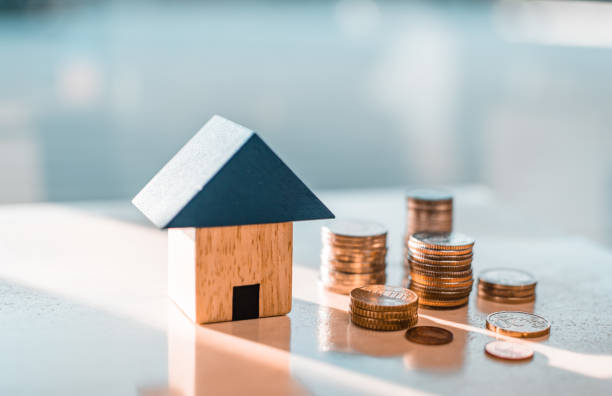
 Many homeowners see their home equity as a safety net or a source of quick cash. You might have heard that you can borrow against the value of your house to pay for a new roof, consolidate credit card debt, or even cover an emergency. While this sounds like a smart move, there is a hidden risk that often gets overlooked: rising interest rates. If you take out a home equity loan or a home equity line of credit, also called a HELOC, and rates go up, your monthly payments can climb much higher than you planned. This can turn a helpful tool into a serious financial headache.To understand this risk, you first need to know the two main ways people borrow against their home equity. A home equity loan gives you a lump sum of money with a fixed interest rate and a fixed monthly payment for a set number of years. That sounds safe because the rate never changes. But many homeowners choose a HELOC instead. A HELOC works more like a credit card. You get a credit limit, and you can borrow money as you need it, up to that limit. The catch is that the interest rate on a HELOC is usually variable. That means it can go up or down based on what the bank decides, often tied to something called the prime rate. When the prime rate goes up, your HELOC rate goes up too.Right now, interest rates are unpredictable. They can stay low for years, then suddenly jump. If you borrow money through a HELOC when rates are low, you might enjoy small payments at first. But if the Federal Reserve raises rates to fight inflation, your bank will raise your HELOC rate as well. A one-percent increase might not sound like much, but it adds up fast. For example, if you have a $50,000 balance on your HELOC and your rate goes from five percent to six percent, your monthly interest payment jumps by about forty dollars. That is almost five hundred dollars more per year. If rates go up two or three percent over the next few years, your payment could increase by hundreds of dollars each month. That extra money has to come from somewhere, and if your paycheck is already stretched tight, you could find yourself struggling to keep up.Another problem is that many people borrow the maximum amount their home equity allows. When you have a big balance, even a small rate increase means a big jump in your payment. Some homeowners use their HELOC to pay off high-interest credit cards, thinking they are saving money. But if the HELOC rate goes up later, that saving can disappear. Worse, if you miss payments because the new amount is too high, you risk losing your home. That is because a home equity loan or HELOC is secured by your house. If you fall behind, the lender can start foreclosure just like they would with your first mortgage.There is also the risk that your home’s value might drop while you have a large equity loan. This happened to many people during the housing crash years ago. If home prices go down, you could end up owing more than your house is worth. That is called being underwater. When you are underwater, you cannot sell your home without bringing cash to closing, and refinancing becomes very difficult. If you also face a higher interest rate on your equity loan at the same time, you are stuck with a loan that is both expensive and impossible to get out of.Another danger is the temptation to keep borrowing more. With a HELOC, you can draw money over and over as long as you stay under your limit. Some homeowners treat it like a backup checking account. They use it for vacations, new cars, or everyday bills. Each time the balance grows, the impact of a rate hike gets worse. By the time you realize rates are rising, you might already owe so much that the new payment is unmanageable.Finally, many people do not realize that their HELOC’s initial low rate may only last for a short period. Some lenders offer a “teaser” rate that is very low for the first year or two, then jumps to a higher variable rate. If you borrowed heavily during the teaser period, the rate reset can be a shock. Suddenly your payment doubles or triples, and you have no way to lower it except by paying down the principal quickly, which is hard to do if your budget is already tight.The best way to protect yourself is to think carefully before borrowing against your home equity. Ask yourself if you truly need the money and if you can afford the payments even if rates go up by two or three percent. Consider getting a fixed-rate home equity loan instead of a HELOC so your payment never changes. And never borrow the full amount you qualify for. Leave a cushion so that if rates rise, you still have room in your budget. Remember, your home is not a piggy bank. Using it as one can backfire when interest rates turn against you.
The 10-year Treasury yield is a key benchmark for fixed mortgage rates. The Fed influences it through its control of short-term rates and its forward guidance. When the Fed signals a future path of rate hikes to combat inflation, it can cause the 10-year yield to rise. When it signals rate cuts or economic concern, the 10-year yield often falls. Market expectations for inflation and economic growth, which the Fed directly influences, are baked into this yield.
A recast is a formal process where, after a significant lump-sum principal payment, your lender re-amortizes the loan, resulting in a lower monthly payment for the remaining term. Making standard extra payments does not change your monthly payment but shortens the loan’s term.
The down payment amount is crucial because it directly impacts your loan size, monthly mortgage payment, interest rate, and whether you’ll have to pay for Private Mortgage Insurance (PMI). A larger down payment generally means lower monthly costs and less paid in interest over the life of the loan.
Yes, indirectly. A higher credit score can sometimes help you qualify for a loan with a lower down payment. For example, with a strong credit profile, you might be approved for a conventional loan with just 3% down. With a lower score, a lender may require a larger down payment (e.g., 10-20%) to reduce their risk, which lowers your loan-to-value (LTV) ratio.
If you are renting, you may need to provide 12 months of cancelled rent checks or bank statements showing on-time payments to your landlord. Some lenders may accept a verification of rent form completed by your landlord.