 If you have been shopping for a home loan or keeping an eye on your monthly payment, you have probably noticed that mortgage rates go up and down. You might hear news reports about the Federal Reserve raising or lowering interest rates, and you wonder: Does that directly change my mortgage rate? The short answer is no, but the longer answer is that the Fed has a very big indirect influence. Understanding how this works can help you make sense of why rates move and when you might want to lock in a loan.The Federal Reserve, often called the Fed, is the central bank of the United States. Its main job is to keep the economy stable. One of its most powerful tools is setting a target for the federal funds rate. That is the interest rate that banks charge each other for overnight loans. When the Fed raises that target, it becomes more expensive for banks to borrow money from each other. Those costs get passed on to consumers in the form of higher interest rates on credit cards, car loans, and sometimes adjustable-rate mortgages. But fixed-rate mortgages are a different story.Fixed mortgage rates are not directly tied to the federal funds rate. Instead, they move with the yield on the 10-year U.S. Treasury bond. Think of a Treasury bond as a loan that you give to the government. The yield is the return you earn on that loan. Mortgage lenders and investors who buy mortgage-backed securities compare those investments to Treasuries. When Treasury yields go up, lenders need to offer higher mortgage rates to attract investors. When yields fall, mortgage rates tend to fall too.So how does the Fed affect Treasury yields? The Fed influences the entire borrowing environment. When the Fed raises its short-term rate, it signals that it is trying to slow down the economy, usually to fight inflation. Investors expect that inflation will be lower in the future, which can push long-term bond yields down at first. But more often, when the Fed raises rates sharply, bond yields jump because investors worry that higher short-term rates will slow growth and cause economic uncertainty. This is why you often see mortgage rates rise right after the Fed announces a rate hike.On the flip side, when the Fed lowers its rate, it is trying to encourage borrowing and spending. That typically drives Treasury yields lower, and mortgage rates follow. But here is the twist: mortgage rates are forward-looking. They react to what investors think the Fed will do in the future, not just what it does today. If the Fed hints that it might cut rates next month, mortgage rates might drop even before the actual cut happens. If the Fed surprises everyone by raising rates, mortgage rates can spike immediately.Another way the Fed influences mortgage rates is through its bond-buying programs, which are often called quantitative easing. In simple terms, the Fed buys large amounts of Treasury bonds and mortgage-backed securities. This increases demand for those bonds, which pushes their yields down and therefore pushes mortgage rates down. The Fed used this strategy during the 2008 financial crisis and again during the pandemic. When the Fed stops buying or starts selling those bonds, yields can go back up, and so can mortgage rates.You do not need to become an expert on bond markets to understand the big picture. The most important thing to know is that mortgage rates are driven by the overall health of the economy. The Fed watches the same things you might read about in the news: how many jobs are being created, how fast prices are rising, and how much consumers are spending. When these indicators show that the economy is overheating, the Fed tends to raise rates. When the economy is weak, it cuts rates. That cycle flows through to your mortgage.For you as a homeowner or homebuyer, this means you can watch the headlines for clues. If inflation is high and the Fed is talking about raising rates, expect mortgage rates to stay high or go higher. If the economy slows down and the Fed starts cutting, mortgage rates will likely come down. Of course, other factors like global events, election uncertainty, or sudden financial crises can also shake things up. But the Fed’s moves are the biggest single force.One common mistake people make is trying to time the market perfectly. Nobody knows exactly when rates will hit a bottom or a peak. The best you can do is pay attention to broad trends and lock in a rate when it fits your budget. If you are shopping for a home, get preapproved and ask your lender to explain how current economic news might affect your rate. Knowing that the Fed has a big influence but does not directly set your mortgage rate can help you stay calm and make a smart decision.
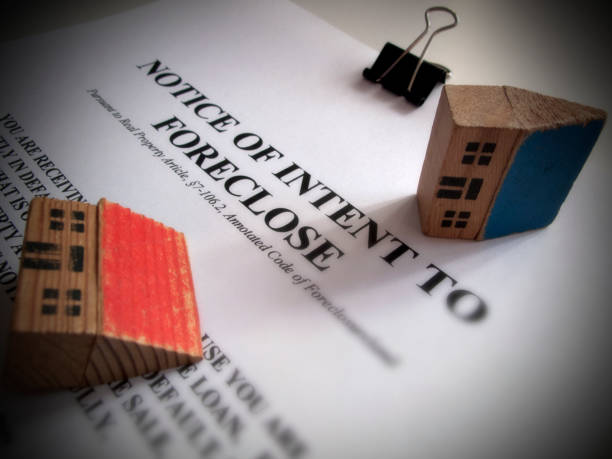
The single biggest risk is the potential for foreclosure. Since your home is the collateral for the loan, if you fail to make the required payments, the lender can initiate foreclosure proceedings. This could result in you losing your home.
The most common issue is an inability to verify stable, predictable income. This can be due to recent job changes to an unrelated field, significant gaps in employment that aren’t well-explained, or unstable income for self-employed borrowers that doesn’t meet the two-year history requirement.
A renovation loan is a specialized mortgage product that bundles the cost of purchasing a home (or refinancing your current one) with the expenses for significant repairs, upgrades, or remodels into a single loan. Unlike a standard mortgage, which is based on a home’s current “as-is” value, a renovation loan is based on the home’s future “after-improved” value, allowing you to borrow more money to fund the project.
Homeowners insurance is a policy that protects your home and belongings from damage or loss. Lenders require it to protect their financial investment in your property. If your house is destroyed by a covered event, like a fire, the insurance ensures there are funds to repair or rebuild it, securing the asset that backs the mortgage loan.
Yes, it is very common for your escrow payment to change. Since it is based on the actual cost of taxes and insurance, any increase in your property tax bill or homeowners insurance premium will result in a higher escrow payment. Your lender will perform an annual escrow analysis to adjust your payment accordingly for the coming year.