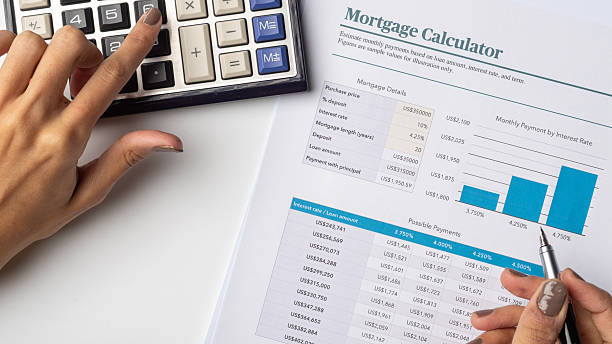
When embarking on the journey to homeownership, few numbers carry as much weight as your credit score. This three-digit figure, a distillation of your financial history, acts as a primary lens through which mortgage lenders assess risk. Its impact on your mortgage rate is profound and direct, essentially determining the cost of borrowing the substantial sum needed to purchase a home. Understanding this relationship is crucial, as even a slight difference in your interest rate can translate to tens of thousands of dollars over the life of your loan.At its core, a mortgage rate is the price a lender charges for the risk they assume by lending you money. Your credit score is the most efficient tool lenders use to gauge that risk. A high credit score, typically above 740, signals to lenders that you have a long and reliable history of managing debt responsibly—paying bills on time, using credit modestly, and maintaining a healthy mix of account types. To a lender, you represent a safe bet, a borrower who is statistically very likely to make every payment in full and on time for the next 15 to 30 years. Because you are a low-risk borrower, lenders are willing to offer you their most competitive, lowest interest rates. This reward for financial diligence is significant, providing immediate and long-term savings.Conversely, a lower credit score tells a different story. Scores below 680, and particularly those in the “fair” or “poor” ranges, indicate to lenders a history that may include late payments, high credit card balances relative to limits, collections, or even more serious issues like bankruptcy or foreclosure. From the lender’s perspective, this history suggests a higher statistical probability of future missed payments or default. To offset this increased risk, lenders charge a higher interest rate. This higher rate protects the lender’s investment; the additional interest collected over time helps balance out the potential losses they might incur from higher-risk borrowers. Therefore, a borrower with a lower score will be quoted a higher rate for the exact same loan amount and term as someone with excellent credit, directly increasing their monthly payment and total loan cost.The practical financial impact of this rate differential is staggering. Consider a $300,000, 30-year fixed-rate mortgage. A borrower with excellent credit might qualify for an interest rate of 6.5%, resulting in a monthly principal and interest payment of approximately $1,896. A borrower with fair credit might be offered a rate of 7.5% for the same loan, leading to a monthly payment of $2,098—an increase of over $200 every month. Over the full 30-year term, the borrower with the lower credit score would pay over $72,000 more in interest alone. This stark contrast illustrates how your credit score doesn’t just affect your approval odds; it fundamentally dictates the affordability and total cost of your mortgage.Furthermore, your credit score can affect more than just the interest rate. It can influence the type of loan you qualify for, the required down payment, and whether you must pay additional fees. For instance, with conventional loans, a lower score often triggers mandatory loan-level price adjustments, which are upfront fees that further increase closing costs. For government-backed loans like FHA loans, a lower score may still allow for qualification but will require a higher mortgage insurance premium, adding to the monthly expense.In conclusion, your credit score is the financial passport to your mortgage terms. It is the key determinant in the interest rate offered to you, serving as a direct reflection of risk in the eyes of lenders. By diligently building and maintaining a strong credit profile before applying for a mortgage, you position yourself not merely for approval, but for the most favorable terms possible. This proactive financial management ultimately secures not just a house, but a more stable and cost-effective financial future, saving you a substantial sum over the decades of your home loan.
This depends entirely on your financial situation. A 30-year mortgage offers a lower monthly payment, providing more flexibility in your budget for other expenses, investments, or savings. A 15-year mortgage requires a higher monthly payment, so it’s better suited for borrowers with stable, high-income jobs and robust emergency funds who can comfortably afford the steeper cost.
Beyond Jumbo loans, the non-conforming category includes several other specialized products:
Government-Backed Loans: FHA, VA, and USDA loans are non-conforming because they don’t follow Fannie/Freddie guidelines and are instead insured by federal agencies.
Subprime Loans: For borrowers with poor credit histories.
Bank Statement Loans: For self-employed borrowers who use bank statements instead of tax returns to qualify.
Portfolio Loans: Loans a lender funds and keeps in its own portfolio, allowing for more flexible, custom terms.
This depends entirely on your lender’s policy. Some lenders may allow multiple recasts, while others may limit you to just one over the life of the loan. You must inquire with your loan servicer about their specific rules.
The decision to pay points is independent of your down payment. It primarily depends on your cash-on-hand for closing and how long you plan to keep the mortgage. A larger down payment improves your loan-to-value ratio, but points are a separate strategy for managing your interest cost.
An FHA loan is a mortgage insured by the Federal Housing Administration.
Who it’s for: It is designed for low-to-moderate income borrowers, first-time homebuyers, and those with less-than-perfect credit.
Key Features: It allows for a lower down payment (as low as 3.5%) and is more flexible with credit score and debt-to-income (DTI) ratio requirements compared to conventional loans.