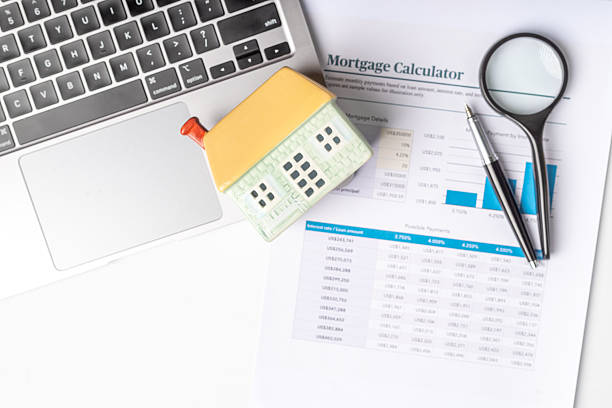
 When you shop for a home loan, you will hear about two main types of mortgage rates: fixed and adjustable. The name tells you the basic difference. With a fixed rate, your interest rate stays the same for the entire loan term, usually fifteen or thirty years. With an adjustable rate, your rate starts lower but can go up or down over time based on market conditions. Which one is better depends on your personal situation, especially how long you plan to keep the house and how comfortable you are with change.A fixed rate mortgage gives you certainty. Your monthly payment for principal and interest will never change. This makes budgeting easy. If interest rates rise in the future, your payment stays low. If rates drop, you could refinance to get a lower rate, but you are not forced to. The tradeoff is that fixed rates are usually higher than the starting rate on an adjustable mortgage. You pay a premium for the peace of mind that your payment will not jump.An adjustable rate mortgage, often called an ARM, starts with a lower rate than a fixed loan. That lower rate lasts for a set period, commonly five, seven, or ten years. After that initial period, the rate adjusts once a year based on a specific financial index plus a margin set by the lender. Your rate can go up or down, but most ARMs have caps that limit how much the rate can increase each year and over the life of the loan. The big advantage is a lower payment in the early years, which can help you qualify for a larger loan or save money if you sell or refinance before the adjustment period ends.The key question is how long you plan to live in the house. If you know you will move within five to ten years, an ARM can save you thousands of dollars because you will not be around when the rate starts adjusting. For example, a five-year ARM might give you a rate that is one full percentage point lower than a thirty-year fixed loan. On a three hundred thousand dollar loan, that difference could lower your monthly payment by about two hundred dollars. Over five years, that adds up to more than twelve thousand dollars in savings. After five years, the rate could rise, but you would have already moved and the new owner would deal with any increases.On the other hand, if you plan to stay in the house for a long time, a fixed rate is usually safer. Even if you think rates will stay low, unexpected inflation or a strong economy can push rates higher. If you have an ARM and rates jump, your monthly payment could increase by several hundred dollars. That can strain your budget and even put you at risk of foreclosure if you cannot afford the new payment. Fixed rate mortgages protect you from that shock. You might pay a little more each month from the start, but you never have to worry about a rising rate.Another factor to consider is what rates are doing right now. If current fixed rates are historically low, locking in a low fixed rate makes sense. If fixed rates are high and you expect them to come down, an ARM could be a temporary solution. You would use the lower ARM rate for a few years, then refinance into a fixed loan when rates drop. But refinancing costs money and time, and nobody can predict future rates with certainty. Relying on refinancing is a gamble.Your personal risk tolerance matters too. Some people sleep better knowing their payment will not change. They would rather pay a bit more for that stability. Others are comfortable with some uncertainty if it means a lower payment now and a chance to save money. If you have a stable job and an emergency fund that can cover a higher payment, an ARM might be a reasonable choice. If your finances are tight or you do not have much savings, the safety of a fixed rate is hard to beat.Lenders also look at your loan size and credit score. ARMs sometimes have stricter qualification rules because the lender is taking on more risk if rates rise. But in general, both types are available to most borrowers with good credit.In the end, there is no one right answer. The best mortgage rate type is the one that matches your timeline, your budget, and your comfort with change. If you expect to move within the initial fixed period of an ARM, that loan can save you money. If you plan to stay put for many years, a fixed rate gives you peace of mind. Talk to a mortgage professional and run the numbers for your specific situation. That will help you see exactly how much you could save or risk with each option. Understanding the difference between fixed and adjustable rates is the first step toward making a smart choice for your home and your family.
Yes, HOA fees can and often do increase. The HOA board conducts annual budgets and may raise fees to cover rising costs for services, utilities, and insurance. Special assessments (one-time fees) can also be levied for unexpected major repairs that the reserve fund cannot cover.
Your first point of contact should always be the new servicer, as they are now responsible for your loan.
If you cannot resolve the issue with them, you can contact the Consumer Financial Protection Bureau (CFPB) or your state’s attorney general’s office for assistance.
Your share is typically calculated based on your “percentage of ownership” in the common elements of the community, which is usually outlined in the HOA’s governing documents. This percentage is often, but not always, tied to the square footage or value of your unit relative to others.
Pay down credit card balances, avoid taking on new debt, consider a debt consolidation loan to lower monthly payments, and if possible, increase your income with a side job or overtime. Avoid closing old credit accounts, as this can shorten your credit history and lower your score.
The down payment amount is crucial because it directly impacts your loan size, monthly mortgage payment, interest rate, and whether you’ll have to pay for Private Mortgage Insurance (PMI). A larger down payment generally means lower monthly costs and less paid in interest over the life of the loan.