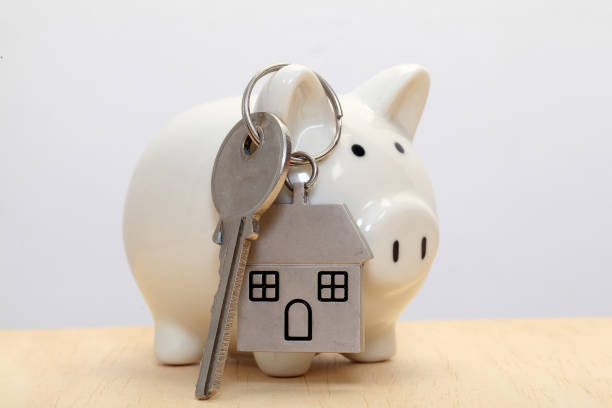
 When you buy a home, your down payment gets most of the attention. But there is another big expense you need to plan for long before you sign the final papers. Those are your closing costs. Closing costs are the fees and charges you pay on the day you actually finalize your home loan. They can add up to thousands of dollars, and if you are not ready for them, they can throw a wrench in your entire home buying plan. That is why saving for closing costs needs to be a priority right alongside saving for your down payment.First, it helps to understand what closing costs actually cover. Think of them as the price of processing your mortgage. They include things like the fee for having your credit report pulled, the cost of an appraisal to make sure the house is worth what you are paying, title insurance to protect against ownership disputes, and the lender’s own processing and underwriting fees. You also have to prepay some items like property taxes and homeowners insurance. In total, closing costs usually land somewhere between two and five percent of the home’s purchase price. So if you are buying a two hundred and fifty thousand dollar house, you could be looking at five thousand to twelve thousand dollars or more just in closing costs.That number can feel overwhelming, especially when you are already trying to save a full twenty percent down payment. But the key is to treat closing costs as a separate, non-negotiable part of your budget. You cannot roll them into your loan in most cases, and you cannot skip paying them. So you need a dedicated savings plan.The first step is to get an honest estimate of what your closing costs will be. You do not need an exact number this early. You can use a standard rule of thumb, like three percent of the home price. If you are not sure what price home you can afford, look at your income and current debts to get a rough idea. Then multiply that target price by 0.03. That gives you a ballpark savings goal. Write that number down and treat it like a bill you have to pay.Next, break that big goal into smaller, monthly chunks. If you plan to buy a home in two years, divide your total closing cost estimate by twenty-four. That tells you how much you need to set aside each month. For example, if your closing costs will be around seven thousand dollars, you need to save about two hundred and ninety dollars per month for two years. That is very doable if you adjust your spending habits.Now, where does that money come from? Start by looking at your current monthly spending. Most people have small leaks that can be plugged without much pain. Maybe you eat out three times a week. Cut it back to once a week and put the difference into a separate savings account. Maybe you subscribe to streaming services you barely watch. Cancel two of them and add that money to your closing cost fund. Even twenty or thirty dollars a week adds up fast.Another smart move is to put any windfalls straight into this account. That includes tax refunds, work bonuses, birthday cash, or money from selling something you no longer need. When you get an unexpected extra hundred or five hundred dollars, resist the urge to spend it on something fun. Instead, drop it into your closing cost savings. These chunks can dramatically speed up your progress.Automation is your best friend here. Open a separate savings account specifically for closing costs. Do not keep this money in your main checking account where it is too easy to spend. Then set up an automatic transfer from your checking to that savings account every payday. Even if it is only fifty dollars per check, the habit of saving before you see the money makes a huge difference. Over time, you will hardly notice the money is gone, but your closing cost balance will grow.You can also look for ways to earn extra income on the side. A weekend gig like delivering food, tutoring, or dog walking can bring in an extra couple hundred dollars a month. Direct every penny of that side hustle money into your closing cost fund. Because the work is temporary, it will not burn you out. And knowing that every hour you work is getting you closer to your home can be very motivating.Do not forget that you can lower your closing costs too, which makes your savings goal smaller. Shop around for lenders before you commit. Different lenders charge different fees. Ask each one for a Loan Estimate, which is a standard form that lists all the closing costs. Compare them side by side. You might find that one lender charges significantly less in origination fees or processing costs. Also ask if the seller is willing to pay some of your closing costs as part of your offer. In a buyer’s market, sellers often agree to cover a portion of these fees to close the deal. That can trim thousands off your out-of-pocket expense.Finally, keep your credit score as high as possible throughout the savings period. A better credit score qualifies you for lower interest rates, which can also reduce certain closing costs. Pay all your bills on time, keep credit card balances low, and avoid opening new accounts. A small improvement in your score can save you real money on the day you close.Saving for closing costs does not have to be stressful. Treat it like any other financial goal. Set a target, break it into manageable pieces, automate your savings, and look for ways to cut costs. Before you know it, you will have that money ready and waiting. Then when you sit down at the closing table, you can sign your papers with confidence, knowing you are fully prepared for every dollar that comes due.
The trade-off is monthly payment vs. total cost. 15-Year Term: Higher monthly payment, but significantly less total interest paid and faster equity buildup. 30-Year Term: Lower monthly payment, which improves cash flow and qualifying power, but you pay much more in interest over the full term.
Your monthly payment is calculated by multiplying the interest rate by the outstanding loan balance and dividing by twelve. For example, on a £300,000 loan with a 4% interest rate, your interest-only payment would be (£300,000 x 0.04) / 12 = £1,000 per month. This is in contrast to a repayment mortgage, where the payment would be higher because it includes both interest and a portion of the principal.
Your primary point of contact is your mortgage servicer, whose contact information is on your monthly mortgage statement. If you are unable to resolve an issue with them (for example, a dispute over a shortage calculation), you can file a complaint with the Consumer Financial Protection Bureau (CFPB) or your state’s banking or financial regulator.
The single biggest risk is the balloon payment itself. If you are unable to pay the large lump sum when it comes due, you could face foreclosure. This can happen if you cannot sell the house for a high enough price, cannot qualify to refinance the loan, or simply don’t have the cash on hand.
While not a constant monthly bill, appliances have ongoing costs.
Energy and Water: Older, less efficient appliances can significantly increase your utility bills.
Maintenance: Regular cleaning and servicing (e.g., cleaning dryer vents, descaling a water heater) can extend their life and prevent costly repairs.
Warranties: You may choose to pay for extended warranties or home warranty plans to cover repair or replacement costs.