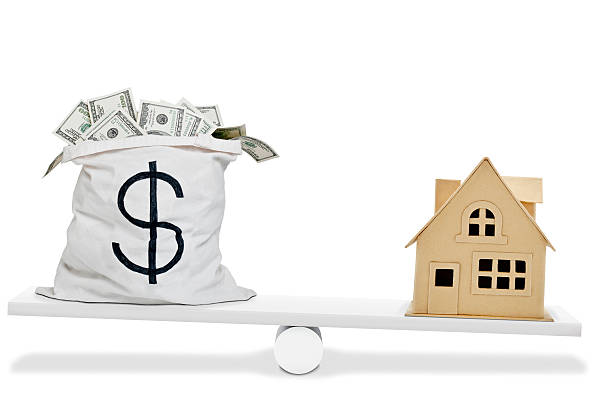
 The journey to homeownership is paved with financial decisions, but few carry the weight and long-term consequences of the down payment. This initial lump sum, often viewed as a formidable hurdle, is far more than a simple entry fee. It is a foundational element that ripples through every aspect of a mortgage, influencing immediate affordability, long-term financial health, and the very stability of the housing transaction. Understanding its profound importance is crucial for any prospective buyer.At its most fundamental level, the size of a down payment directly dictates the scale of the mortgage loan itself. A larger down payment means borrowing less money from a lender. This simple arithmetic has immediate and powerful effects. Most notably, it lowers the monthly principal and interest payment, making homeownership more affordable on a month-to-month basis and freeing up cash for other living expenses, savings, or investments. Furthermore, borrowing less means paying interest on a smaller principal balance, which translates to tens of thousands of dollars saved over the life of the loan. This interest savings is a compelling financial reason to strive for a larger initial investment.Beyond the basic loan amount, the down payment is the primary factor in determining whether a borrower must pay for private mortgage insurance, or PMI. This is an additional monthly fee designed to protect the lender, not the homeowner, in case of default. Typically required for conventional loans with down payments of less than twenty percent, PMI adds a significant cost that builds no equity. Achieving that twenty percent threshold is therefore a major financial milestone, as its elimination immediately improves cash flow and increases the efficiency of each mortgage payment. For many buyers, avoiding PMI is a primary motivator for saving a more substantial down payment.The down payment also serves as a critical signal to the mortgage lender, demonstrating financial discipline and risk management. A substantial down payment signifies that the borrower has the ability to save and manage money responsibly over time. This reduces the lender’s perceived risk in two key ways. First, the borrower has more immediate equity in the property, making them less likely to walk away if the market dips temporarily—a scenario known as being “underwater.“ Second, a significant personal investment suggests a stronger commitment to maintaining the loan. This improved risk profile can result in a more favorable interest rate offered by the lender, which further compounds the long-term savings on the loan. A lower rate, secured by a strong down payment, is a gift that keeps on giving for fifteen to thirty years.This concept of initial equity cannot be overstated. Equity acts as a financial cushion and a source of opportunity. In a fluctuating housing market, a home purchased with a ten percent down payment can quickly slip into negative equity if prices decline only modestly. A buyer who put twenty percent or more down, however, has a built-in buffer against minor market corrections. This equity also provides greater financial flexibility, making it easier to refinance the mortgage later or access funds through a home equity line of credit for major expenses like renovations or education.Ultimately, the down payment amount is important because it functions as the cornerstone of a sound mortgage structure. It directly controls the size of the debt, the cost of borrowing, the requirement for ancillary insurance, and the level of personal risk exposure. While lower down payment programs exist and provide vital pathways to ownership for many, they come with higher long-term costs and reduced financial buffer. Therefore, the down payment is not merely a barrier to be cleared but a strategic tool. Maximizing it within one’s means is an investment in immediate affordability, long-term wealth building, and financial security, setting the stage for a more stable and prosperous homeownership experience. It is the first and most impactful step in turning a house into a sustainable home.
You can usually switch to a repayment mortgage at any time, often without a fee. This is done by contacting your lender and requesting the change. Your lender will recalculate your monthly payments based on the remaining loan term and balance. Many borrowers do this when their financial circumstances improve to start building equity and avoid the large payment shock later.
A Home Equity Loan is generally the better choice for a large, one-time expense with a known cost, such as a roof replacement, debt consolidation, or a major home renovation. You receive the entire amount upfront and lock in a predictable monthly payment.
Yes, you can often roll the cost of points into your total loan amount instead of paying for them out-of-pocket at closing. However, this will increase your loan balance and your monthly payment slightly, which can affect your overall savings calculation.
Pre-qualification is a quick, informal estimate based on unverified information you provide. Pre-approval is a much more rigorous process where the lender checks your financial background and credit, giving you a definitive, conditional commitment that carries significant weight with sellers.
A gift letter is required if you are using gifted funds for your down payment or closing costs. It must be signed by the donor and state their relationship to you, the gift amount, that it does not need to be repaid, and the source of their funds. You will also need to provide the donor’s bank statement showing the funds.