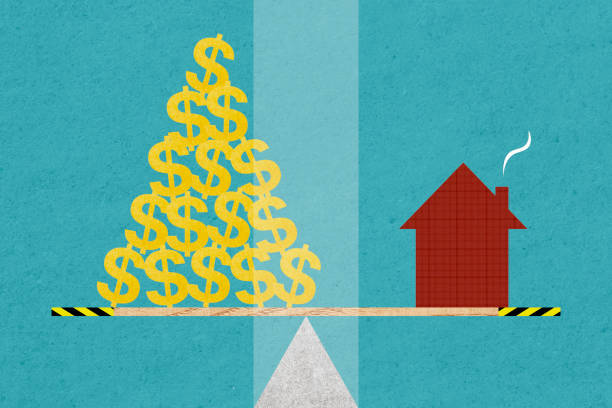
 Your home is likely the biggest purchase you will ever make, and over time, it can build up value. This value is called equity. Equity is the difference between what your home is worth and what you still owe on your mortgage. When you hear about homeowners borrowing against that equity, it sounds like free money. After all, you already own that value, so why not use it? The problem is that when you take out a home equity loan or a home equity line of credit, you are not getting free money. You are putting your home on the line again. This essay will explain the real dangers of treating your home equity like a personal ATM machine.The first and most obvious risk is that you could lose your home. A home equity loan is a second mortgage. That means if you stop making payments, the lender can take your house through foreclosure. This is not like missing a credit card payment where you get a late fee and a ding on your credit report. Missing payments on a home equity loan can put a roof over your head in jeopardy. Many homeowners think they will always be able to make the payments, but life is unpredictable. Job loss, medical emergencies, or a divorce can wipe out your income quickly. If you have borrowed a large portion of your equity, you may not be able to keep up. And if you fall behind, the lender does not care why. They want their money back, and they will take your house to get it.Another risk that people often overlook is the problem of falling home prices. When you borrow against your equity, you are betting that your home will hold its value or go up. But real estate markets go up and down. If home prices drop, you could end up owing more on your home than it is worth. This is called being underwater or having negative equity. If that happens, you cannot sell your home without bringing cash to the closing table. You also cannot refinance to get a better rate because no lender will lend you more than the house is worth. And if you need to move for a new job or because of a family issue, you will be stuck. You could be forced to sell at a loss or even face a short sale, which hurts your credit for years.Interest rates are another hidden danger, especially if you use a home equity line of credit, or HELOC. Many HELOCs have variable interest rates. That means your monthly payment can go up and up as the Federal Reserve raises rates. A few years ago, rates were near zero. Today they are much higher. If you took out a HELOC with a low teaser rate, your payments might have doubled or tripled. That can quickly make the loan unaffordable. Even fixed-rate home equity loans are not risk free, because the rate you lock in might be higher than your first mortgage rate. And remember, you are borrowing that money for years, sometimes 15 to 30 years. That is a long time to pay interest on money you used for a vacation or a new car.Speaking of what you spend the money on, that is a major risk too. Many people use home equity to pay off credit cards or other high-interest debt. That sounds smart, but it often backfires. If you pay off your credit card debt with a home equity loan, you are turning unsecured debt into secured debt. Credit card companies cannot take your house if you do not pay. But your home equity lender can. Worse, many people run their credit cards back up after paying them off. Now they have a home equity payment plus new credit card debt. That double hit can lead to financial ruin.There are also fees and closing costs that eat into the money you actually get. Home equity loans often have application fees, appraisal fees, title insurance, and origination fees. These can add up to thousands of dollars. If you only borrow a small amount, those fees make the loan very expensive. And if you take a HELOC, you might have an annual fee just to keep the line open. Some lenders even charge a penalty if you pay off the loan early. All of these hidden costs mean you get less benefit than you expected.Finally, borrowing against your equity reduces your financial flexibility. Your home equity is one of your most valuable assets. It can be a safety net for retirement, a source of money for emergencies, or a way to help your kids with college. Once you borrow against it, you lose that safety net. You also reduce the equity that your heirs would inherit. And if you want to sell your home later, you will have to pay off both mortgages out of the sale proceeds, leaving you with less cash for your next home. In short, treating your home like an ATM can give you cash today, but it takes away your future options.The bottom line is simple. Home equity is not free money. It is the part of your home that you truly own. Using it wisely means thinking twice before borrowing. For most homeowners, it is safer to keep that equity untouched unless you have a very clear plan to pay it back and a stable income to handle the payments. Do not let the bank make you feel like you are leaving money on the table. Your home is not a bank account. It is your shelter. Protect it.
1. Review your purchase contract: Check the closing date and any penalties for delay. 2. Get a solid Loan Estimate from the new lender: Ensure the better terms are officially documented. 3. Communicate with your real estate agent: They can advise on the timeline risks and talk to the seller’s agent. 4. Confirm the new lender can close on time: Get a guaranteed closing timeline in writing.
A fixed-rate mortgage is significantly easier to budget for in the long term. Because the payment is completely predictable, you can plan your finances for decades without worrying about fluctuations in your largest monthly expense.
APR calculations generally include:
The note interest rate
Origination fees or points
Underwriting and processing fees
Mortgage insurance premiums (if applicable)
Other lender-specific fees
This is precisely what title insurance is for. If a covered title defect emerges after you close—for example, a previously unknown heir claims ownership—you would file a claim with your title insurance company. They would then handle the legal defense and cover any financial losses up to the policy’s limit, protecting you from a devastating financial burden.
An application can be denied for several reasons, including a low credit score, a high Debt-to-Income (DTI) ratio, unstable employment history, an insufficient down payment, issues with the property’s appraisal, or new debt taken on during the application process.