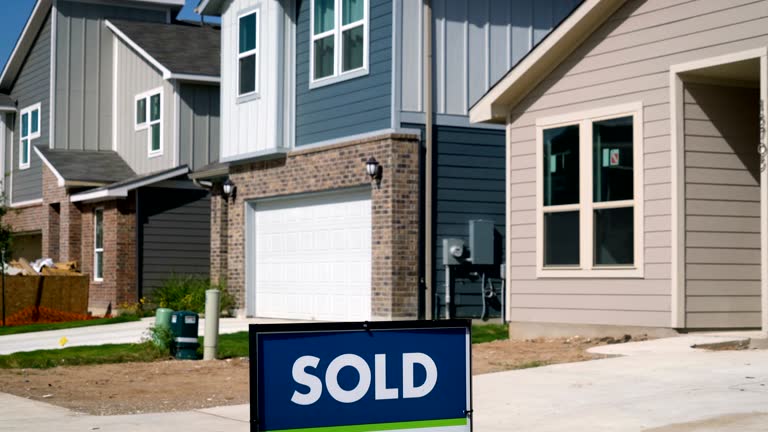
 The question of how much money is needed for a down payment is one of the most significant financial considerations for prospective homebuyers, and the answer is more nuanced than a single figure. While the traditional benchmark of twenty percent persists in popular imagination, the reality of today’s housing market reveals a spectrum of possibilities, influenced by loan type, financial profile, and personal circumstance. Understanding these variables is crucial for transforming the dream of homeownership into an achievable plan.For decades, a twenty percent down payment was considered the gold standard. This threshold is not arbitrary; it carries substantial financial advantages. Most importantly, it allows buyers to avoid Private Mortgage Insurance (PMI), an additional monthly fee that protects the lender in case of default. A larger down payment also translates to a smaller loan principal, resulting in lower monthly mortgage payments and less interest paid over the life of the loan. Furthermore, it demonstrates significant financial discipline to lenders, potentially securing more favorable interest rates. For these reasons, saving for a twenty percent down payment remains a prudent, if challenging, long-term goal for many.However, the modern mortgage landscape offers numerous pathways for those who cannot amass such a substantial sum. Government-backed loans provide accessible entry points. The Federal Housing Administration (FHA) loan, for instance, requires a minimum down payment of just three and a half percent for borrowers with credit scores as low as 580. This program has been instrumental in opening homeownership to first-time buyers and those with limited savings, though it mandates both an upfront and an annual mortgage insurance premium. For those who have served their country, VA loans, guaranteed by the Department of Veterans Affairs, and USDA loans, for eligible rural and suburban buyers, offer the remarkable benefit of zero percent down payment, with no mortgage insurance required.Conventional loans, which are not government-insured, also offer flexibility. Through entities like Fannie Mae and Freddie Mac, qualified buyers can secure conventional financing with as little as three percent down. These programs are often geared toward first-time homebuyers but are not exclusive to them. It is critical to note that with any down payment below twenty percent on a conventional loan, PMI will be required until the homeowner’s equity reaches twenty-two percent of the home’s value. Additionally, a lower down payment often necessitates a stronger credit score and a stable debt-to-income ratio to offset the lender’s increased risk.Beyond loan programs, the actual dollar amount required is intrinsically tied to the purchase price of the home. A three percent down payment on a $300,000 home is $9,000, while on a $500,000 home it rises to $15,000. This direct correlation underscores the importance of budgeting realistically for both the property price and the accompanying down payment. Crucially, buyers must also account for closing costs, which typically range from two to five percent of the loan amount, and ensure they retain sufficient savings for moving expenses, immediate repairs, and a responsible emergency fund after the transaction is complete.Ultimately, determining the necessary down payment is a deeply personal calculation that balances opportunity with cost. While a larger down payment provides undeniable financial benefits in the long run, a smaller, more attainable amount can provide the key to entering the housing market sooner and beginning to build equity. The essential step for any buyer is to engage in a thorough assessment of their finances, explore all available loan options with a qualified mortgage professional, and choose a path that aligns with their immediate capabilities and long-term financial health. The journey begins not with a fixed sum, but with informed planning.
Once your offer on a home is accepted, you will provide the signed purchase agreement to your lender. They will then move the process into underwriting, which includes ordering a home appraisal and verifying all conditions are met to convert your pre-approval into a final, clear-to-close loan.
Yes, you can often roll the cost of points into your total loan amount instead of paying for them out-of-pocket at closing. However, this will increase your loan balance and your monthly payment slightly, which can affect your overall savings calculation.
Unlike renting, where the landlord handles repairs, you are solely responsible for all maintenance as a homeowner. Failing to budget for these costs can lead to financial crisis when a major system fails. A dedicated maintenance fund prevents you from going into debt or being unable to afford critical repairs, which protects your home’s value and your investment.
While our core operations run during business hours, our team often works flexibly to meet client needs. You may receive communications during evenings or weekends, but please do not feel obligated to respond until standard business hours. For true after-hours emergencies, a dedicated on-call number will be provided for urgent, time-sensitive closing issues.
The physical inspection of the property usually takes between 30 minutes and a few hours, depending on the home’s size and complexity. The entire process—from the lender ordering the appraisal to the borrower receiving the report—typically takes 7 to 10 days, but can vary based on market demand and location.