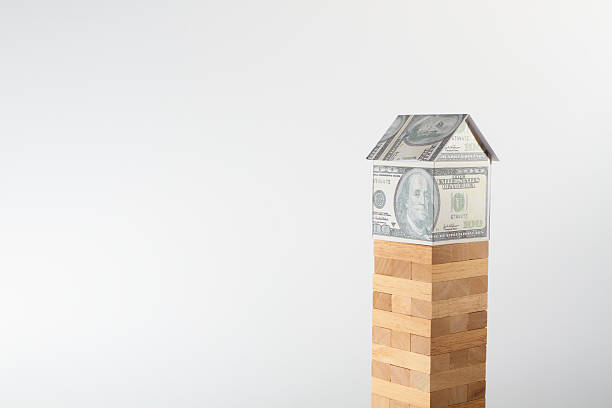
 In the intricate dance of purchasing a home, the down payment often takes center stage as the most significant initial financial hurdle. While minimum requirements exist, opting for a larger down payment than strictly necessary confers a powerful array of financial benefits that resonate throughout the life of a mortgage. This strategic move transcends mere upfront cost, shaping long-term affordability, security, and flexibility for the homeowner. The advantages are multifaceted, impacting monthly budgets, total loan costs, and even the psychological ease of homeownership.The most immediate and tangible benefit of a larger down payment is the reduction of the principal loan amount. By contributing more capital upfront, the borrower simply needs to borrow less money from the lender. This directly translates to lower monthly mortgage payments, freeing up cash flow for other life priorities, investments, or unexpected expenses. This reduced monthly burden can provide a crucial buffer during economic downturns, career transitions, or family expansions, enhancing overall financial resilience. Furthermore, a smaller loan amount means that over the life of a 15 or 30-year term, the total interest paid to the lender decreases substantially. Since interest is calculated on the remaining principal, starting with a lower principal results in significant savings, often amounting to tens or even hundreds of thousands of dollars, effectively keeping more wealth in the homeowner’s pocket.A larger down payment also profoundly influences the terms offered by lenders, primarily through the elimination of Private Mortgage Insurance. For conventional loans where the down payment is less than twenty percent of the home’s purchase price, lenders typically require PMI. This insurance protects the lender, not the homeowner, in case of default and adds a non-trivial monthly cost that does not contribute to equity. By making a down payment of twenty percent or more, borrowers automatically avoid this additional fee, further lowering their monthly outlay and improving the efficiency of each payment toward building ownership stake. Additionally, a substantial down payment is a compelling demonstration of financial discipline and stability to lenders. This often results in qualifying for a more favorable interest rate. A lower rate compounds the benefits, further reducing both monthly payments and the total interest paid over the loan’s lifespan, creating a virtuous cycle of savings.Beyond the pure mathematics of finance, a larger down payment builds immediate and meaningful equity in the property. Equity, the portion of the home truly owned, serves as a critical financial safety net and a source of opportunity. In a fluctuating housing market, starting with more equity provides a cushion against potential downturns, making it less likely to find oneself in an “underwater” situation where the mortgage exceeds the home’s value. This equity is not static; it can be leveraged in the future through home equity lines of credit for major renovations, educational expenses, or other investments, albeit with careful consideration. Perhaps most importantly, substantial equity fosters a profound sense of security and ownership, transforming a house from a perpetual debt obligation into a genuine and growing asset from day one.Finally, the practice of saving for a larger down payment instills invaluable financial habits. The discipline required to accumulate such a sum often involves budgeting, conscious spending, and long-term goal setting—skills that serve the homeowner well beyond the closing date. This process also positions the buyer to make a more competitive offer in a bustling market, as sellers often view a buyer with significant ready capital as more secure and likely to close without financing complications. In essence, the benefits of a larger down payment are both immediate and enduring. It is a decisive financial maneuver that lowers costs, minimizes risk, and establishes a foundation of strength for one of life’s most significant investments, proving that the weight of the initial lift yields a far lighter burden for the journey ahead.
A rate lock is a guarantee from the lender that your interest rate will not change between the lock date and your closing, protecting you from market fluctuations. A float-down option is a paid feature that allows you to secure a lower rate if market interest rates decrease during your lock period.
Lenders generally do not charge a separate fee for managing an escrow account. The costs are typically built into the overall servicing of your loan. However, you should review your Loan Estimate and Closing Disclosure documents from when you obtained the mortgage to see if any specific escrow-related fees were charged at closing.
You make regular monthly payments, which are often calculated as if the loan were a standard 30-year mortgage. However, unlike a 30-year mortgage, the loan is not fully amortized over that term. At the end of the short-term period (the “balloon date”), the entire remaining principal balance is due and payable in full.
Yes, it is possible through a “conforming refinance.“ This might be a smart financial move if your situation changes, such as:
Your local conforming loan limit increases, and your loan balance now falls under it.
You pay down your jumbo mortgage balance below the conforming limit.
Your credit score or financial profile improves significantly, making you eligible for a conforming loan with a better rate.
The BBB assigns letter-grade ratings (A+ to F) based on factors like the business’s complaint history, transparency, and responsiveness in resolving those complaints. An “Accredited” business has met BBB standards and paid a fee. Check the BBB profile not just for the grade, but for the number and details of filed complaints and how the lender responded.