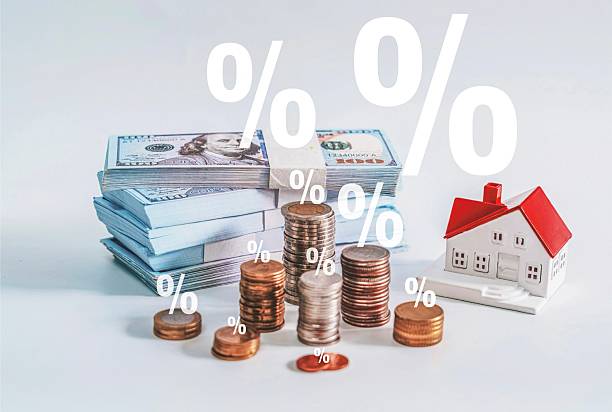
 When you start shopping for a mortgage, one of the first decisions you will face is choosing the length of your loan, known as the term. The two most common options are the 15-year mortgage and the 30-year mortgage. Many homeowners assume that a shorter term simply means paying off your house faster, but there is another key difference you need to understand: the interest rate. Lenders almost always offer a lower rate on a 15-year loan than on a 30-year loan. Why does that happen, and what does it mean for your monthly budget and your long-term financial picture? Let’s walk through it in plain terms.First, it helps to think about how lenders set rates. When you borrow money for a home, the lender takes on risk. The longer you have the loan, the more time there is for things to go wrong. You could lose your job, the economy could take a downturn, or interest rates in general could rise, making the lender’s money less valuable. A 30-year loan exposes the lender to that uncertainty for twice as long as a 15-year loan. To compensate for that extra risk, lenders charge a higher interest rate on longer terms. So, the 15-year mortgage typically comes with a rate that is about 0.5 to 1.0 percentage points lower than the rate on a 30-year mortgage. Over the life of the loan, that difference adds up to tens of thousands of dollars in interest savings.Now, let’s look at the monthly payment side. Because a 15-year loan must be paid off in half the time, your monthly payment will be significantly higher than it would be on a 30-year loan, even with the lower rate. For example, suppose you borrow $300,000. On a 30-year mortgage at a hypothetical rate of 7 percent, your monthly principal and interest payment would be roughly $1,995. On a 15-year mortgage at a lower rate of 6 percent, that payment jumps to about $2,531. That is over $500 more per month. So the trade-off is clear: you get a cheaper rate, but you have to stretch your budget to afford the higher payment.Why would anyone choose the 15-year loan then? Because the long-term savings are huge. Over 30 years at 7 percent, you would pay about $418,000 in interest on that $300,000 loan. Over 15 years at 6 percent, you would pay only about $155,000 in interest. That is a difference of more than $263,000. Plus, you own your home free and clear in half the time. If you can comfortably handle the larger monthly payment, the 15-year mortgage is a powerful way to build wealth and avoid years of interest payments.But not everyone can handle that payment. Many families have other priorities like saving for retirement, paying for children’s college, or simply covering everyday expenses. A 30-year mortgage gives you breathing room. The lower monthly payment frees up cash that you can invest elsewhere or use for emergencies. Some homeowners take the 30-year loan but make extra payments when they have extra money, which effectively shortens the term while keeping the flexibility of a lower required payment. That hybrid approach can be smart because you can skip extra payments during tight months without penalty.There is another factor to consider: what you plan to do with your home. If you think you might move within five to ten years, the advantages of a 15-year mortgage shrink. You will not be in the house long enough to reap all that interest savings, and you will have made many high payments that you could have used for other things. In that case, a 30-year loan with a lower payment might make more sense. On the other hand, if you plan to stay put for decades and you have a stable income, the 15-year mortgage can be a smart path to debt-free homeownership.The relationship between the rate and the loan term comes down to a basic trade-off. A shorter term gives you a lower rate but a higher monthly payment. A longer term gives you a higher rate but a lower payment. There is no single right answer for everyone. The best choice depends on your budget, your job stability, your future plans, and your comfort with debt. Before you decide, use an online mortgage calculator to run the numbers for your specific loan amount and current rates. Look at the monthly payment difference and the total interest over the life of each loan. That will give you a clear picture of the trade-off you are making.In the end, understanding this relationship helps you make a confident decision. The lower rate on a 15-year loan is not a trick or a gimmick. It is simply the lender’s way of charging less for a shorter commitment. Your job is to figure out which commitment works best for your life. By knowing the trade-off between rate and term, you can choose the mortgage that fits your finances and your future.
The main risks include higher interest rates than your first mortgage, the possibility of losing your home if you default, additional monthly payments that strain your budget, and paying more in interest over the long term if the loan term is extended.
Yes, absolutely. While your general emergency fund (3-6 months of living expenses) covers income loss, a separate home maintenance fund is specifically for unexpected household repairs, like a broken water heater or a leaking roof. This prevents you from derailing your overall financial stability when a home-related crisis occurs.
You will need to provide extensive documentation, typically including:
Proof of Income: Pay stubs, W-2s, and tax returns (last two years).
Proof of Assets: Bank statements, investment account statements.
Employment Verification: Contact from the underwriter to your employer.
Credit History: The underwriter will pull your credit report.
Property Details: The purchase agreement and the appraisal report.
Explanations: Letters of explanation for any financial irregularities, like large deposits or gaps in employment.
A good rule of thumb is to set aside 1% to 2% of your home’s purchase price each year for maintenance and repairs.
For a $300,000 home, this means budgeting $3,000 to $6,000 annually.
This fund is for ongoing upkeep like HVAC servicing, gutter cleaning, and unexpected repairs like a broken appliance or a leaky roof.
Yes, some costs can change. There are three categories of tolerance, or how much a cost can increase at closing:
Zero Tolerance: Cannot increase (e.g., lender’s origination fee).
10% Tolerance: Can increase up to 10% in total (e.g., certain third-party fees like title services).
No Tolerance: Can change without limit (e.g., prepaid items like daily interest or homeowner’s insurance).