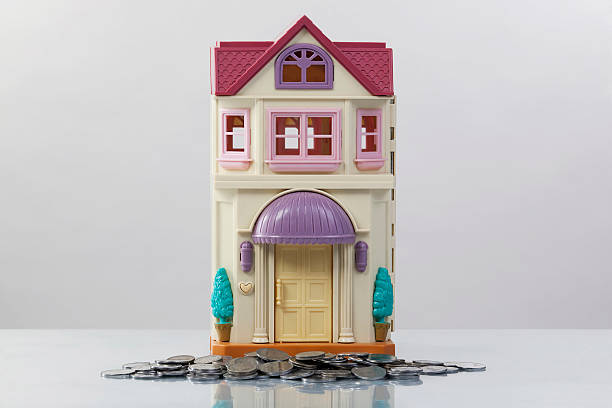
 The journey to homeownership is punctuated by a significant milestone: the closing table. While buyers diligently save for their down payment, many are surprised by the additional, sometimes substantial, fees known as closing costs. So, how much should you realistically expect to pay? As a rule of thumb, you can anticipate closing costs to range from 2% to 5% of your home’s total purchase price. This means on a $400,000 home, your closing costs could fall anywhere between $8,000 and $20,000. However, this figure is not a single line item but a mosaic of various charges, and understanding its composition is key to financial preparedness.Closing costs are the collective fees paid to finalize a real estate transaction, separate from your down payment. They are paid at the settlement, when the property title transfers from seller to buyer. These costs are divided between lender-related fees and third-party charges. Lender fees include expenses like the loan origination fee, which is essentially the cost of processing your mortgage, and points, which are optional fees paid upfront to lower your interest rate. You will also encounter charges for the appraisal, required to confirm the home’s market value, and a credit report fee. Furthermore, lenders will require you to prepay certain items, such as homeowners insurance for the first year and several months of property taxes, which are held in an escrow account.The other major portion of closing costs encompasses services provided by independent parties. A title search and title insurance are paramount, protecting both you and the lender from any legal claims or liens against the property. Attorney fees, if your state requires one at closing, and settlement agent fees will also be present. You will likely pay for a home inspection, a crucial step for understanding the property’s condition, though this is often paid upfront outside of closing. Additionally, there will be recording fees charged by your local government to officially document the deed and mortgage.It is crucial to recognize that your specific costs are not a mystery until the last minute. Federal law mandates that your lender provide you with a Loan Estimate within three business days of your mortgage application. This three-page document offers a detailed, good-faith breakdown of your projected closing costs. Then, at least three business days before your scheduled closing, you will receive the Closing Disclosure. This final form mirrors the Loan Estimate and provides the exact figures you will need to bring to the table. Comparing these two documents carefully is essential to ensure there are no unexpected, significant changes.While the 2%-5% range is a reliable starting point, several factors can influence where you land within that spectrum. Your geographic location plays a significant role, as state and local government fees and transfer taxes can vary dramatically. The type of mortgage loan you choose also affects the total; for instance, FHA and VA loans have specific upfront insurance premiums that increase closing costs. Perhaps the most powerful tool at your disposal, however, is negotiation. In some markets, it is customary for the seller to contribute to the buyer’s closing costs, a term negotiated into the purchase agreement. You can also shop around for certain services, like title insurance, in states where it is allowed, to find the most competitive rates.Ultimately, budgeting for closing costs is a non-negotiable part of the home-buying calculus. By anticipating a sum equivalent to a small percentage of your home’s price, scrutinizing your Loan Estimate and Closing Disclosure, and exploring opportunities for seller assistance or shopping for services, you can transform these costs from a shocking surprise into a manageable part of your path to owning a home. Preparation and knowledge are your best assets in ensuring a smooth and financially sound closing day.
Historically, jumbo loan rates were higher than conventional conforming rates, but this is not always the case today. Often, jumbo loan interest rates are very competitive and can sometimes be lower than conforming rates, depending on the lender, the borrower’s financial strength, and market conditions.
A good rule of thumb is to save between 2% and 5% of your home’s purchase price. For example, on a $300,000 home, you should budget between $6,000 and $15,000 for closing costs.
The mortgage interest tax deduction allows homeowners who itemize their deductions on their tax return to deduct the interest paid on a loan used to buy, build, or substantially improve a qualified home. This reduces your taxable income, which can lower your overall tax bill.
The final walkthrough is your last opportunity to inspect the property before closing. Its primary purpose is to verify:
The seller has completed all agreed-upon repairs.
The property is in the same condition as when you last saw it.
No new damage has occurred.
All included items, like appliances and window treatments, are still present.
The home has been vacated and is broom-clean (unless otherwise agreed).
Being prepared speeds up the process. Typically, you’ll need recent pay stubs, W-2s, tax returns, bank statements, and documentation for any other assets or debts. Getting a precise list early helps you gather everything efficiently.