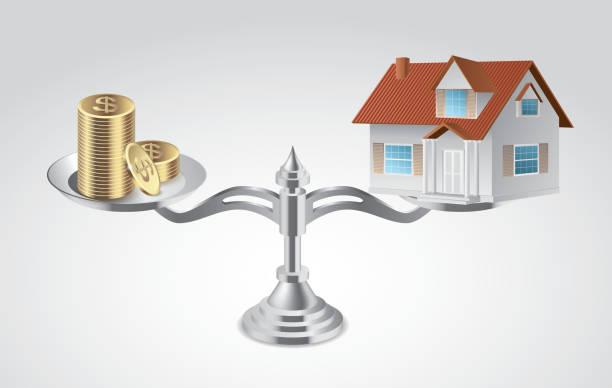
 For prospective homebuyers navigating the complex world of real estate financing, two terms frequently arise: conforming loans and jumbo loans. While both are conventional mortgages not backed by a government agency, the fundamental distinction between them lies in their loan amount relative to limits set by the Federal Housing Finance Agency. This seemingly simple difference triggers a cascade of consequences affecting eligibility, cost, and the overall borrowing experience. Understanding this divide is crucial for anyone considering the purchase of a standard home versus a higher-priced property.A conforming loan is defined by its adherence to, or conformity with, the loan limits and underwriting guidelines established by the FHFA for mortgages acquired by Fannie Mae and Freddie Mac. These government-sponsored enterprises exist to provide liquidity to the mortgage market by purchasing loans from lenders, thereby freeing up capital for more lending. The conforming loan limit is adjusted annually and varies by county, reflecting local housing costs. For most of the United States in 2024, the baseline limit for a single-family home is $766,550, though in high-cost areas like parts of California or New York, it can be as high as $1,149,825. Because these loans are eligible for sale to Fannie or Freddie, they are considered less risky for the original lender. This reduced risk translates into tangible benefits for the borrower, typically including lower interest rates, more flexible down payment options—sometimes as low as 3% for qualified buyers—and slightly more lenient credit score requirements, often starting around 620.In contrast, a jumbo loan, also known as a non-conforming loan, exceeds the local conforming loan limits. Designed for financing luxury homes or properties in exceptionally expensive real estate markets, jumbo loans cannot be sold to Fannie Mae or Freddie Mac. Consequently, the lending institution retains the risk of the loan on its own books. This heightened risk for the lender fundamentally shapes the jumbo loan process. To offset their exposure, lenders impose stricter qualification standards. Borrowers must generally exhibit exceptional financial health, including higher credit scores—often 700 or above—lower debt-to-income ratios, and substantial cash reserves, sometimes enough to cover twelve months or more of mortgage payments. Furthermore, down payment requirements are more substantial, frequently starting at 10% to 20% of the purchase price, and a thorough, documented verification of income and assets is standard procedure.The divergence in risk profile also directly impacts the cost of borrowing. Historically, jumbo loans carried higher interest rates than conforming loans. However, in recent years, this dynamic has sometimes inverted, with jumbo rates occasionally dipping below conforming rates. This phenomenon is often driven by the specific risk appetite of large banks competing for affluent clients. Nevertheless, even when rates are comparable, the stricter underwriting and larger loan amounts mean the overall financial scrutiny and potential closing costs can be greater for a jumbo mortgage. The market for these loans is also less standardized; terms, rates, and requirements can vary significantly more from one lender to another than they do for conforming products, making thorough comparison shopping essential.Ultimately, the choice between a conforming and jumbo loan is not a matter of preference but of necessity, dictated by the price of the property one intends to purchase. For homes priced at or below the local conforming limit, borrowers will typically seek a conforming loan to access its favorable terms. Once the loan amount surpasses that threshold, a jumbo loan becomes the only conventional path forward, demanding a higher level of financial fortitude from the applicant. Recognizing this critical difference empowers buyers to accurately assess their purchasing power, prepare the necessary documentation, and approach the mortgage application process with realistic expectations, ensuring they secure financing that aligns with both their dream home and their financial reality.
Lenders typically require several documents to verify your income, assets, and debts. Commonly requested items include: Proof of Income: Recent pay stubs, W-2 forms from the last two years, and tax returns. Proof of Assets: Bank statements (checking, savings, and investment accounts) from the last 2-3 months. Identification: A government-issued photo ID, such as a driver’s license or passport. Employment Verification: Lender may contact your employer directly.
The most common issue is an inability to verify stable, predictable income. This can be due to recent job changes to an unrelated field, significant gaps in employment that aren’t well-explained, or unstable income for self-employed borrowers that doesn’t meet the two-year history requirement.
You will need to provide the most recent two months of statements for all checking, savings, and investment accounts. These must show your name, account number, and all transaction details. Be prepared to explain any large, non-payroll deposits.
An ARM may be a good fit for someone who:
Plans to sell or refinance before the initial fixed period ends.
Expects their income to increase significantly in the future.
Is comfortable with some financial uncertainty and risk.
A properly executed rate lock is a binding agreement, and the lender cannot revoke it or change the rate during the lock period, provided you close on time and your financial situation does not change materially (e.g., your credit score drops significantly or you change the loan amount).