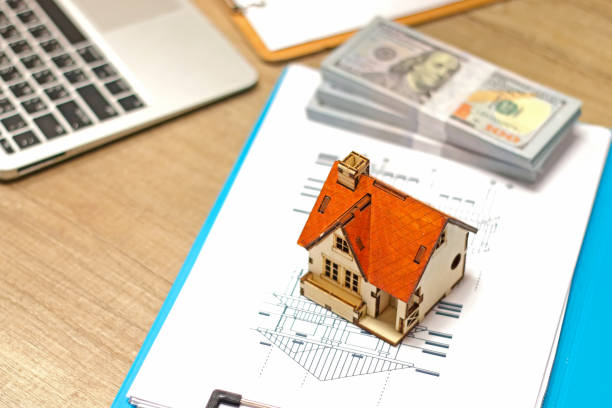
 If you are planning to build a new home from scratch or do a major renovation that changes the whole structure of your house, you might hear about a construction-to-permanent loan. This type of loan is different from a regular mortgage because it covers the cost of the building work first and then turns into a regular home loan once the house is finished. Many homeowners find this option simpler and less stressful than having to apply for two separate loans.A construction-to-permanent loan works in two stages. In the first stage, which is the construction phase, the lender gives you money in pieces as the builder needs it. This is called a draw schedule. For example, when the foundation is poured, the lender releases a certain amount of money to pay the contractor. When the framing is up, another chunk of money comes out. This keeps the loan amount tied to what you actually need at each step, rather than giving you the full amount all at once. During construction, you usually only pay interest on the money that has been drawn so far, not on the total loan amount. This helps keep your monthly payments lower while construction is going on.Once the house is finished and you get a certificate of occupancy, the loan automatically moves into the second stage, which is the permanent mortgage phase. This is a standard fixed-rate or adjustable-rate mortgage that you pay back over the usual 15, 20, or 30 years. The interest rate for the permanent phase is usually locked in at the beginning of the loan, so you do not have to worry about rates rising while your house is being built. That is a big advantage because building a home can take many months, and market rates can change a lot during that time.One of the main reasons people choose a construction-to-permanent loan is that it saves them from having to close on two separate loans. If you take out a separate construction loan and then later get a regular mortgage, you have to pay closing costs twice, fill out two sets of paperwork, and go through two credit checks. With a construction-to-permanent loan, you only go through the closing process once. That can save you a significant amount of money and hassle.Another benefit is that your monthly payments during construction are limited to interest only, which helps your budget while you are still living in your current home or paying rent elsewhere. And because the permanent mortgage is already set up, you do not have to worry about qualifying for a new loan when the house is done. Some people have had the shock of finishing their dream home only to find out that their credit score dropped or their income changed, making it hard to get a mortgage. With a construction-to-permanent loan, that risk is much lower because your financing is secured from the start.However, these loans are not for everyone. They typically require a larger down payment than a standard mortgage. Many lenders want at least twenty percent down, and sometimes more. You also need to have a very good credit score and a low debt-to-income ratio. The approval process is more detailed because the lender needs to review the building plans, the contractor’s credentials, and the estimated cost of construction. You will need to provide a detailed budget and timeline from your builder.Some homeowners find it easier to use a renovation loan like the FHA 203(k) or Fannie Mae HomeStyle loan, which are designed for fixing up an existing home rather than building a whole new one. But if you are starting from an empty lot or tearing down an old house to build a new one, a construction-to-permanent loan is often the best fit.One key thing to understand is that the interest rate on the construction phase is usually a little higher than the rate on the permanent loan. That is because the lender is taking more risk while there is no finished house to use as collateral. But once you move into the permanent phase, the rate drops to the one you locked in earlier.You should also know that during construction, the lender will send an inspector to check the work before each draw is released. This protects both you and the lender. It makes sure the builder is doing the work correctly and that the money is being used for what it is supposed to be used for.In short, a construction-to-permanent loan is a smart way to finance building a home if you can handle the bigger down payment and the extra paperwork upfront. It simplifies the process, locks in your rate, and gives you one set of closing costs instead of two. If you are planning to build, this is a type of loan worth asking your lender about.
The single biggest risk is the potential for foreclosure. Since your home is the collateral for the loan, if you fail to make the required payments, the lender can initiate foreclosure proceedings. This could result in you losing your home.
A fixed-rate mortgage is significantly easier to budget for in the long term. Because the payment is completely predictable, you can plan your finances for decades without worrying about fluctuations in your largest monthly expense.
If there is a significant change in your application—such as a change in the loan amount, a different property, or you decide on a different loan product—the lender may need to issue a revised Loan Estimate. This new form will reflect the updated terms and costs.
The main risks include higher interest rates than your first mortgage, the possibility of losing your home if you default, additional monthly payments that strain your budget, and paying more in interest over the long term if the loan term is extended.
You should do a light review of your budget every month when you pay bills. Conduct a more thorough review at least once a year, or whenever you experience a major life change (e.g., job change, new family member) or a significant change in housing costs (e.g., property tax increase, insurance renewal).