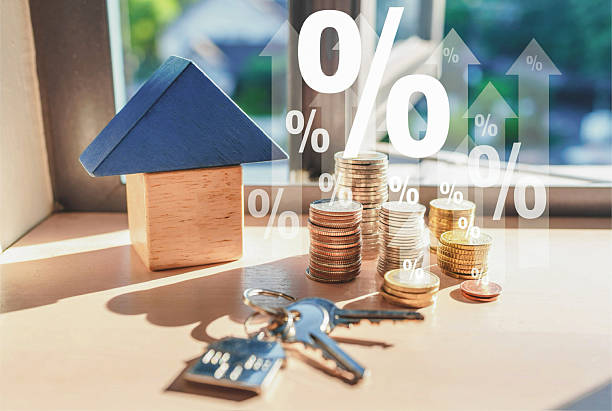
 If you are looking at a home loan, you will hear about two main types of interest rates: fixed and adjustable. A fixed rate stays the same for the entire life of the loan. An adjustable rate, also called an ARM, can go up or down over time. That might sound scary, but it helps to understand exactly how and why an adjustable rate changes. This way you can decide if it is right for your situation.An adjustable rate mortgage starts with a low introductory rate that lasts for a set number of years, often five, seven, or ten. After that period ends, the rate can adjust at regular intervals, usually once a year. The new rate is not pulled out of thin air. It is based on two main pieces: a financial index and a margin that your lender adds on top. The index is a number that moves up and down with the overall economy. Lenders use well-known indexes, such as the Secured Overnight Financing Rate, or SOFR, or the yield on one-year Treasury bills. When these indexes go up, your rate tends to go up. When they go down, your rate can go down, too.The margin is a fixed percentage that your lender sets when you first take out the loan. For example, if the index is at 2% and your lender’s margin is 2.5%, your full rate would be 4.5%. That margin never changes over the life of the loan. So the only part of your rate that moves is the index. That is why your rate can feel like a roller coaster. When the economy is strong and inflation is high, interest rates across the country rise, and so does the index. When the economy slows down and the Federal Reserve lowers rates, the index falls, and your monthly payment can drop as well.To protect you from huge jumps, every adjustable rate mortgage comes with rate caps. Caps are limits on how much your rate can go up or down at each adjustment and over the whole loan. The most common structure has three caps. The first cap limits how much the rate can increase at the very first adjustment after the introductory period. For example, it might say your rate cannot go up more than 2% at that first change. The second cap limits how much your rate can go up or down at each later adjustment, often 1% or 2% per year. The third cap is a lifetime cap that sets the highest your rate can ever reach, usually 5% or 6% above your starting rate. So even if the index skyrockets, your rate will never go above that lifetime ceiling.For a homeowner, the most important thing to understand is that an adjustable rate is not a mystery. It follows a clear formula: index plus margin equals your rate, but only within the limits set by your caps. When you shop for an ARM, the lender will give you a disclosure that shows the index, the margin, and the caps. Read that paper carefully. It will also show you what your monthly payment could look like in a worst-case scenario, meaning if the rate hits the lifetime cap. That number can be a lot higher than your initial payment, so you need to be sure you can handle that possibility.The big difference between a fixed rate and an adjustable rate comes down to predictability versus potential savings. With a fixed rate loan, you know exactly what your principal and interest payment will be every month for thirty years. That is a safe bet if you plan to stay in your home for a long time. With an adjustable rate, you get a lower introductory rate, which saves you money in the early years. But you take on the risk that rates might go up later. That trade-off makes sense if you expect to move or refinance before the rate starts adjusting, or if you are comfortable with a little uncertainty.Many homeowners choose an adjustable rate when they buy a starter home and plan to sell within five to seven years. Others use an ARM to lower their monthly payment during a tight financial period, then refinance to a fixed rate when their income improves. The key is to be honest with yourself about your future plans. If you cannot afford a payment that might increase, a fixed rate is the safer choice. If you have room in your budget and are willing to watch the index, an ARM can be a smart move.Remember, the rate on an adjustable mortgage changes because the economy changes. It is not random, and it is not a trick. It is a loan that shares some of the risk of rising interest rates with the lender. By learning how the index, margin, and caps work together, you can make a clear decision about whether an ARM fits your homeownership goals.
You must proactively contact your mortgage servicer (the company you send your payments to) to request forbearance. Be prepared to explain your financial hardship. It is crucial to call as soon as you anticipate difficulty making a payment. Do not simply stop paying, as this could lead to foreclosure.
Yes, it is very common for your escrow payment to change. Since it is based on the actual cost of taxes and insurance, any increase in your property tax bill or homeowners insurance premium will result in a higher escrow payment. Your lender will perform an annual escrow analysis to adjust your payment accordingly for the coming year.
A common rule of thumb is to consider refinancing when interest rates are at least 0.5% to 0.75% lower than your current rate. However, this depends heavily on your loan balance, how long you plan to stay in the home, and the closing costs associated with the new loan. Use a break-even analysis to determine the exact point where you start saving.
The best time is after you have received a formal Loan Estimate from a lender but before you have locked your rate. This is when you have the most leverage. You can also try to negotiate after a rate lock if market rates have improved significantly, but lenders are not obligated to adjust a locked rate.
While building great credit takes time, you can see meaningful improvements in a few months by focusing on these key areas:
Pay All Bills On Time: Set up autopay or payment reminders. This is the single most important factor.
Lower Your Credit Utilization: Pay down credit card balances to keep your utilization below 30% of your limit, and ideally below 10% for the best results.
Avoid Applying for New Credit: Each application causes a “hard inquiry,“ which can temporarily lower your score.
Don’t Close Old Credit Cards: Closing an account shortens your average credit history and reduces your total available credit, which can hurt your score.