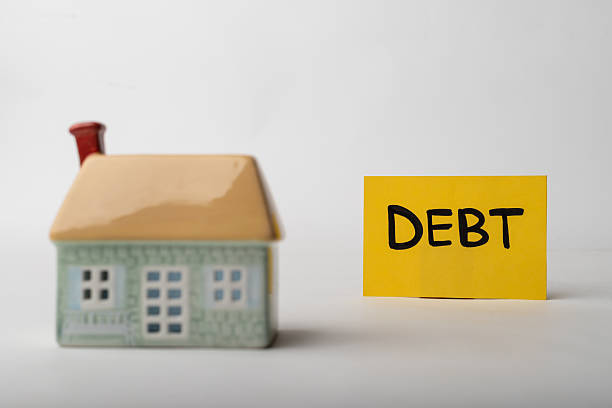
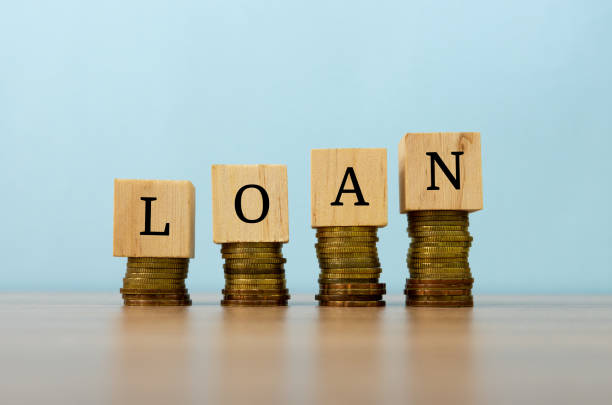
 A balloon mortgage sounds like a friendly deal at first. You get low monthly payments for a set number of years, and then the whole thing is over. But that “over” part is where the trouble lives. With a balloon mortgage, you do not pay off the loan gradually over thirty years. Instead, you make small payments for a short period, often five or seven years, and then you owe the entire remaining balance all at once. That final lump sum is called the balloon payment, and it can be tens or even hundreds of thousands of dollars. If you are not ready for it, that balloon can pop your financial future.People choose balloon mortgages because the initial payments are much lower than a standard fixed-rate loan. You might pay only the interest each month, or a little more, but the principal barely goes down. That frees up cash in the short term, which can feel great if you are stretching to afford a house or want to invest your money elsewhere. The plan is usually that by the time the balloon payment comes due, you will either sell the house or refinance into a new loan. In theory, that works fine. In reality, it often does not.The biggest risk of a balloon mortgage is that you might not be able to refinance when the time comes. Refinancing means taking out a new loan to pay off the old one. But to qualify for a new mortgage, you need good credit, steady income, and enough equity in your home. If your home value has dropped since you bought it, you might owe more than the house is worth. That is called being underwater, and banks will not lend you more money than the property is worth. Even if your home value stays steady, interest rates could rise. A balloon loan that seemed cheap in a low-rate market can suddenly become very expensive to replace. If your credit score has slipped because of a missed payment or a job loss, you may not qualify for any loan at all.Another risk is that you plan to sell the house before the balloon payment comes due, but the market turns against you. Maybe the neighborhood goes downhill, or the economy slows down and buyers disappear. You might have to sell at a loss or sit on the market for months while the balloon deadline looms. If you cannot sell fast enough, you could face foreclosure. The lender can take your home and sell it to recover the money you owe. That process ruins your credit and leaves you with nothing.Balloon mortgages were a big problem during the housing crash in the late 2000s. Many homeowners took out these loans during the boom, expecting prices to keep rising. When values fell, they could not refinance and could not sell. Thousands lost their homes. Even today, balloon loans are still offered, but they are usually reserved for people who have a clear exit plan, like investors flipping houses or borrowers who know they will receive a large inheritance or bonus before the balloon date. For the average homeowner, the risk is just too high.If you already have a balloon mortgage, do not wait until the last minute. Start planning at least a year before the balloon payment is due. Talk to your lender about your options. Some lenders will agree to modify the loan or extend the term. You might be able to convert the balloon mortgage into a traditional fixed-rate loan if you qualify. If you cannot refinance, consider selling the house early, even if it means taking a smaller profit. Losing some money on a sale is a lot better than losing the whole house to foreclosure.For anyone thinking about a balloon mortgage, the safest advice is to avoid it. Stick with a standard thirty-year fixed-rate mortgage. The monthly payments are higher, but you know exactly what you will pay every month until the loan is gone. There are no surprises, no huge payments, no last-minute scramble. A balloon mortgage might look like a shortcut, but it often leads to a dead end. The peace of mind of a predictable payment is worth more than the temporary savings. Your home is too important to gamble on a financial trick that can backfire hard.
Yes, it is possible, but it is considered a “subprime” or “private” lending scenario. These loans come with substantially higher interest rates and fees to compensate the lender for the increased risk. Improving your credit score first is always the recommended path.
Conforming loan limits are the maximum loan amounts set by the Federal Housing Finance Agency (FHFA) for mortgages that Fannie Mae and Freddie Mac can purchase. These limits are adjusted annually and are based on changes in the average U.S. home price. Most of the country has a baseline limit, but “high-cost areas” where 115% of the local median home value exceeds the baseline limit have higher ceilings.
For complex or sensitive matters, we highly recommend scheduling a phone call or a virtual meeting with your Loan Officer. This allows for a real-time, confidential conversation where we can give your situation the detailed attention and nuance it deserves, without the limitations of email.
PMI is insurance that protects the lender if you default on your loan.
It is typically required if your down payment is less than 20% of the home’s purchase price.
The cost varies but usually falls between 0.5% and 1.5% of the loan amount annually, added to your monthly payment.
You can request to cancel PMI once your equity reaches 20%.
Jumbo loan underwriting is significantly more rigorous. Lenders will conduct a deep dive into your finances, including:
Verified Assets: You must have sufficient cash reserves, often enough to cover 6 to 12 months of mortgage payments.
Low Debt-to-Income (DTI) Ratio: Most lenders prefer a DTI ratio of 43% or lower.
Detailed Documentation: Expect to provide extensive documentation on income, assets, and employment.