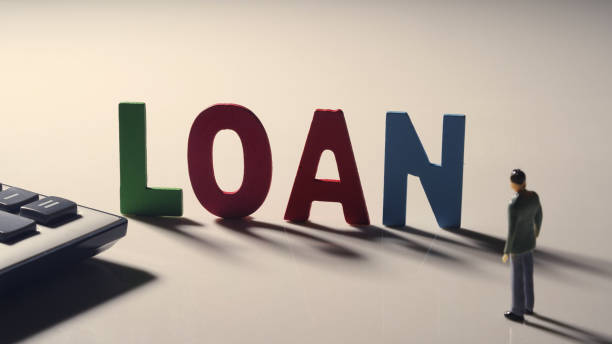
 When borrowers seek financing, whether for a home, car, or personal project, two critical numbers dominate the decision: the loan amount and the Annual Percentage Rate (APR). While many focus on securing the lowest possible monthly payment, the length of the loan term—the period over which the loan is repaid—exerts a profound and often misunderstood influence on the APR. Understanding this relationship is key to making financially sound borrowing decisions, as the term affects the APR through mechanisms of risk, interest calculation, and lender fees.At its core, the APR represents the total annual cost of borrowing, expressed as a percentage. It includes not only the interest rate but also certain fees and other charges mandated by the lender, providing a more comprehensive picture of the loan’s true cost than the interest rate alone. The loan term, typically ranging from 12 months to 30 years, directly shapes this cost structure. A fundamental principle is that longer loan terms generally carry a higher risk for the lender. Over a decade or three, the likelihood of economic shifts, changes in the borrower’s financial stability, or default increases. To compensate for this prolonged risk exposure, lenders often price this uncertainty into the loan by offering a higher interest rate, which in turn elevates the APR. Consequently, a 30-year mortgage will frequently have a higher interest rate, and thus a higher APR, than an otherwise identical 15-year mortgage.However, the relationship between term and APR is not solely dictated by risk premiums. The way lender fees are amortized over the life of the loan plays an equally significant role. Origination fees, processing charges, and other upfront costs are baked into the APR calculation. When these fixed fees are spread over a longer term, their annualized impact is reduced. For example, a $2,000 origination fee on a 5-year loan weighs more heavily on the APR than the same fee on a 10-year loan because it is being amortized over fewer years. In some cases, this can create a scenario where a longer-term loan has a lower APR than a shorter-term loan from the same lender, purely because the fixed costs are diluted. This can be a misleading signal, as the borrower will still pay more in total interest over the extended life of the loan.Beyond fees, the type of interest rate further complicates the dynamic. With fixed-rate loans, the lender assumes the risk that market interest rates will rise during a long term, often leading to a higher initial fixed APR for longer commitments. For adjustable-rate loans (ARMs), the initial term—the period before the rate begins to adjust—is crucial. A 5/1 ARM, fixed for five years, will typically have a lower initial APR than a 30-year fixed loan, reflecting the shorter period of guaranteed rate stability for the lender. Here, the “term” of the fixed-rate portion directly dictates the introductory cost.Ultimately, the loan term’s effect on APR reveals a critical financial trade-off: the pursuit of lower monthly payments via a longer term often comes at the expense of a higher total cost of borrowing. While the APR might sometimes appear marginally lower on a long-term loan due to fee amortization, the sheer number of payment periods means interest accrues for a much longer time. A borrower might secure a 30-year loan with an APR only slightly higher than a 15-year loan, but they will pay interest for an additional 15 years, dramatically increasing the total finance charges. Therefore, the APR should never be viewed in isolation. A savvy borrower must consider the term in conjunction with the APR, calculating the total interest paid over the life of the loan. This holistic view unveils the true cost, empowering individuals to choose a repayment schedule that balances affordable monthly cash flow with the overarching goal of minimizing total interest and achieving financial freedom sooner. The term does not just affect the APR; it defines the entire financial journey of the loan.
You are likely a good candidate if: You want to buy a fixer-upper you couldn’t otherwise afford upfront. You own a home that needs major updates (like a new roof, kitchen, or addition) but lack the cash to pay for it. You don’t want to deal with the hassle and higher costs of a separate personal loan, HELOC, or credit card to fund renovations. You have a solid credit score and a manageable debt-to-income (DTI) ratio.
The best projects are those that add significant value to your home or are essential repairs. This includes kitchen and bathroom remodels, adding a deck or patio, finishing a basement, replacing a roof, or upgrading HVAC systems. These are considered “capital improvements” that enhance your home’s longevity and utility.
While requirements vary by lender, a good credit score (typically 680 or higher) will help you secure the most favorable interest rates. Some lenders may offer products for scores in the mid-600s, but you will likely face higher rates and stricter eligibility criteria.
To calculate the cost of one point, simply take 1% of your total loan amount. For a $400,000 loan, one point would cost $4,000. The cost of a fraction of a point (e.g., 0.5 points) would be calculated proportionally.
The primary risks are significant and must be understood:
Repayment Shock: Your monthly payments will jump dramatically when the interest-only period ends and you must start repaying the capital.
Negative Equity: If house prices fall, you could owe more on the mortgage than the property is worth.
Failed Repayment Strategy: If your chosen method to repay the capital (e.g., investments, sale of property) fails or underperforms, you may be unable to repay the loan.
Lack of Equity Build-Up: You are not building ownership in your home during the interest-only period, leaving you more vulnerable to market shifts.