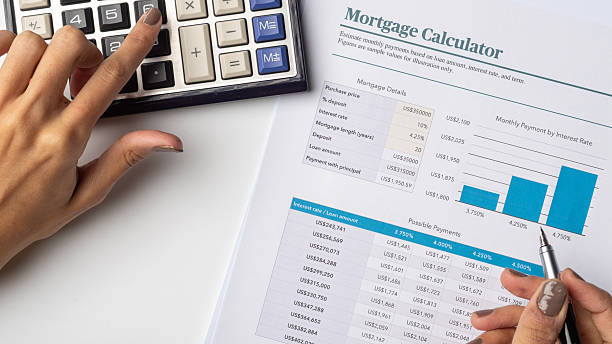
 If you are shopping for a home and need a mortgage, you will quickly run into two categories: conforming loans and non-conforming loans. Most people end up with a conforming loan because it fits within the limits set by Fannie Mae and Freddie Mac, the two big government-sponsored companies that buy most home loans. But sometimes the price of the house you want is higher than that limit. That is when you might need a jumbo loan, which is the most common type of non-conforming loan for a regular purchase.A conforming loan is a mortgage that meets the dollar limits set by the Federal Housing Finance Agency. For a single-family home in most parts of the United States in 2025, that limit is just over $766,000. In higher-cost areas like New York City, San Francisco, or Los Angeles, the limit can be higher, around $1.15 million. If your loan is for an amount under that cap, and you meet the other rules about debt and credit, you can get a conforming loan. Lenders like these loans because they can easily sell them to Fannie Mae or Freddie Mac. That means lenders charge lower interest rates and have simpler requirements.A non-conforming loan is any loan that does not fit these rules. The most common reason is that the loan amount is too big. A mortgage over the conforming limit is called a jumbo loan. But there are other reasons a loan can be non-conforming, like a low credit score or a high debt-to-income ratio. Those kinds of loans are often called “subprime” or “non-prime,” but jumbo loans are a different category because they go to borrowers with good credit and solid finances, just for a larger amount.So why would you want a jumbo loan? Simple: if you are buying a home that costs more than the conforming loan limit, you have no choice. For example, a house listed at $1.2 million in an area where the conforming limit is $766,000 means you need a loan for at least $800,000 after a down payment. That is a jumbo. But jumbo loans are not just for the rich. Many people in expensive cities need them to buy a normal three-bedroom house.Jumbo loans have a few key differences from conforming loans. First, the interest rate is usually a little higher. Lenders take on more risk because they cannot sell these loans to Fannie or Freddie. They keep them on their books or sell them to private investors. That extra risk means a slightly higher rate, often about 0.25 to 0.5 percentage points more. Second, you need a larger down payment. While a conforming loan lets you put as little as 3% down, most jumbo loans require at least 10% to 20% down. Some lenders ask for 30% or more if your credit is not excellent.Third, you need a high credit score. For a conforming loan, a score of 660 might work with a big down payment. For a jumbo loan, lenders usually want 700 or higher, often 720 or 740. They also look closely at your debt-to-income ratio. You cannot have too many other monthly payments compared to your income. Typically, your total debts, including the new mortgage, should be no more than 43% of your pretax income, sometimes lower.Fourth, lenders often want proof that you have cash reserves. They want to see that you can make your mortgage payments for six to twelve months even if you lose your job. That means having extra savings in the bank after you make the down payment and pay closing costs.Fifth, the appraisal process can be stricter. Since the property is high-value, the lender wants to make sure it is really worth what you are paying. They may require two appraisals or a more detailed inspection.Despite these stricter rules, jumbo loans are not impossible to get. They are actually very common in high-cost markets. If you have a stable job, good credit, and enough savings, a jumbo loan can be the right tool to buy the home you want. Just be prepared to shop around because rates and requirements vary a lot from lender to lender. Some credit unions and community banks specialize in jumbo loans for local buyers.One important point: Do not confuse a jumbo loan with a loan that is non-conforming for other reasons, like a low credit score. A jumbo loan is considered a “prime” loan because you are a strong borrower. It is not a risky loan for someone with bad credit. It is just a larger loan.In the end, knowing whether you need a conforming or a non-conforming loan like a jumbo comes down to the price of the house and the loan limit in your area. Check the current conforming loan limits for your county online or ask a lender. If the house you want is over that number, start looking at jumbo loans. They work the same way as a regular mortgage in terms of monthly payments and amortization, but you will need more money upfront and a stronger financial profile.
Our primary methods are email and phone calls. Email is perfect for sending documents, providing detailed updates, and creating a written record. Phone calls are ideal for complex discussions, answering immediate questions, and ensuring we fully understand your unique situation. We can also utilize secure text messaging for quick, time-sensitive alerts.
A Loan Estimate is a standardized three-page form you receive within three business days of submitting your formal loan application. It provides key details about your proposed loan, including the estimated interest rate, monthly payment, closing costs, and any special features or risks, allowing you to compare offers from different lenders.
A mortgage rate is the interest you pay on the money you borrow to purchase a home. It’s expressed as a percentage and determines a significant portion of your monthly mortgage payment. Essentially, it’s the cost of borrowing money from a lender.
To improve your chances of securing a low rate, focus on the factors within your control:
Boost Your Credit Score: Check your reports for errors and pay down debts.
Save for a Larger Down Payment: Aim for at least 20% to avoid PMI and get a better rate.
Lower Your Debt-to-Income Ratio (DTI): Pay off existing debt to improve your financial profile.
Shop Around with Multiple Lenders: Compare Loan Estimates from at least 3-4 different lenders to find the best combination of rate and fees.
Choose the Right Loan Type and Term: A shorter loan term (like a 15-year fixed) usually has a lower rate than a 30-year fixed.
The best time is after you have received a formal Loan Estimate from a lender but before you have locked your rate. This is when you have the most leverage. You can also try to negotiate after a rate lock if market rates have improved significantly, but lenders are not obligated to adjust a locked rate.