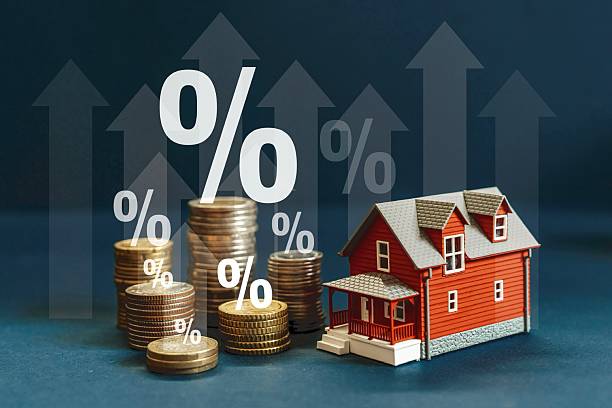
 When you apply for a home loan, you will hear your lender talk about locking your mortgage rate. A rate lock is a promise from the lender that your interest rate will stay the same for a set period of time, usually between 30 and 60 days. This protects you if market rates go up while your loan is being processed. But many homeowners wonder if they should lock right away or wait for a better deal. The risk of waiting to lock your mortgage rate can cost you hundreds of dollars every month, and understanding that risk is the first step to making a smart decision.The basic idea is simple. Mortgage rates change every day, sometimes every hour, based on what is happening in the economy. News about inflation, jobs, or the Federal Reserve can push rates up or down. When you first get a rate quote from a lender, that quote is only good for that moment. If you do not lock it, the rate can move higher by the time you are ready to close on your home. Many people think they can time the market, but that is a gamble. Professional investors and traders watch rates all day and still get it wrong. A regular homeowner has little chance of guessing when rates will drop.Let us look at an example. Suppose you are buying a $300,000 home with a 20 percent down payment. Your loan amount is $240,000. The lender offers you a 30-year fixed rate of 6.5 percent. If you lock that rate, your monthly payment for principal and interest will be about $1,517. Now imagine you decide to wait because you heard rates might go down. A week later, bad economic news causes rates to jump to 7 percent. Your new monthly payment becomes about $1,597. That is an extra $80 every month, or $960 per year. Over 30 years, that adds up to nearly $29,000 in extra interest. All because you waited a week.The risk gets worse if you are working with a tight budget. A higher rate might push your payment above what you qualify for, forcing you to buy a cheaper house or even lose the deal. Sellers and real estate agents usually expect you to close on time. If your rate lock expires because you waited too long, you might have to pay for an extension or start the whole loan application over with a higher rate. Some lenders allow you to float your rate, meaning you do not lock and hope for a better deal before closing. But floating only works if rates go down enough to offset the risk. The truth is that interest rates are unpredictable. In a rising rate market, floating can be disastrous.Another common mistake is waiting to lock until you have a signed purchase agreement. In many cases, you can lock your rate soon after you apply for the loan, even before you find a house. This is called a long-term lock or a rate lock with a longer period, like 90 or 120 days. These locks often cost a little more up front, but they give you peace of mind. If rates go up while you house hunt, you are protected. If rates go down, some lenders offer a one-time float-down option, allowing you to lower your locked rate once without paying extra. That gives you the best of both worlds.The bottom line is that waiting to lock your mortgage rate is a risky strategy that rarely pays off for the average homeowner. The small chance of catching a lower rate is usually not worth the big risk of getting stuck with a higher one. Instead, ask your lender for a quote and lock it as soon as you feel comfortable with the number. If you are still shopping for a house, consider a longer lock period with a float-down clause. That way, you protect yourself from rising rates while keeping the door open if rates happen to fall. Mortgage rates are one of the biggest costs in homeownership, and a rate lock is the simplest way to control that cost. Do not gamble with your monthly budget. Lock it and sleep well at night.
The primary tax benefit for non-itemizers is the ability to exclude capital gains from the sale of your main home (up to $250,000 for single filers and $500,000 for married couples filing jointly, if you meet ownership and use tests). There is no federal deduction for mortgage interest if you take the standard deduction.
No, you do not need a new owner’s policy when refinancing. Your original owner’s policy remains in effect for as long as you own the property. However, your lender will require a new lender’s title insurance policy to protect their new loan, for which you will pay a premium. In some cases, a “re-issue rate” may be available if your previous policy is recent.
As a homeowner, you have a right to participate in association governance. You can:
Attend HOA board meetings and voice your concerns.
Review the project’s details, bids, and the reserve study.
Run for a position on the HOA board to have a direct role in financial decisions.
In extreme cases of mismanagement, owners may pursue legal action.
The coverage of HOA fees varies by community, but they generally pay for:
Common Area Maintenance: Landscaping, lighting, and cleaning for parks, pools, clubhouses, and lobbies.
Amenities: Upkeep and insurance for pools, gyms, tennis courts, and security gates.
Utilities: Water and electricity for common areas, and sometimes trash collection for individual homes.
Insurance: Master liability and property insurance for all shared structures.
Reserve Fund: A savings account for major future repairs like repaving roads, replacing roofs on condos, or repainting exteriors.
Management Costs: Salaries for a property management company and HOA administration.
The loan-to-value (LTV) ratio is a key metric lenders use to assess risk. It’s calculated by dividing your loan amount by the appraised value of the home. A lower LTV (meaning a larger down payment) generally means you’ll qualify for a better interest rate and avoid paying for private mortgage insurance (PMI).