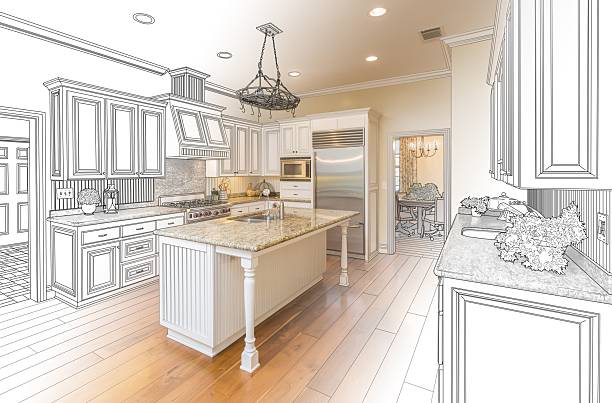


Remodeling your home can be exciting. A new kitchen, a bigger bathroom, or a finished basement can make daily life better and raise your home’s value. But when you pay for a big renovation with a second mortgage or a home equity line of credit, you are using your house as collateral. If you fall behind on payments, you could lose the roof over your head. So the question is not just “How much can I borrow?“ It is “How much can I borrow without putting my home and budget at risk?“
A home equity line of credit, often called a HELOC, works like a credit card tied to your house. You get a set credit limit and can draw money as you need it. After that, you repay the balance, often with a payment that can change. A home equity loan, sometimes called a second mortgage, gives you one lump sum with a fixed rate and fixed monthly payment. For renovations, a HELOC can work well if your project happens in stages. A home equity loan can work better if you have a firm bid and want a predictable payment. A cash-out refinance replaces your first mortgage and gives you cash, but it only makes sense if the new loan is clearly better.
Start with the project, not the loan. Get at least three written bids from contractors. Ask what is included and how long the work will take. Add a cushion of ten to twenty percent for surprises. Once you know the realistic cost, decide how much you can afford to repay each month. Do not let a lender talk you into the maximum amount. Just because you qualify for a large credit line does not mean you should use it. Borrowing extra “just in case” turns your home into a piggy bank, and that extra money comes with interest and risk.
Lenders often look at your loan-to-value ratio, which compares all loans on your home to its current value. Many allow you to borrow up to eighty or eighty-five percent of your home’s value when you add your first mortgage and the new loan together. For example, if your home is worth four hundred thousand dollars and you owe two hundred fifty thousand, an eighty percent limit would be three hundred twenty thousand. That leaves seventy thousand dollars you could borrow. But your smart number may be much lower. If the renovation costs forty-five thousand, borrow close to that plus a small cushion, not the full seventy thousand.
Repayment is where people get into trouble. A HELOC often starts with interest-only payments that look low. Later, when you must repay principal, the payment jumps. If rates rise, it jumps again. A fixed home equity loan has a steadier payment, but it still adds a new bill every month. Before you sign, ask if you could handle the payment if you lost your job, had a medical bill, or needed a new car. If the answer is no, borrow less or wait.
Choose renovations with your long-term plan in mind. If you plan to sell soon, focus on projects buyers value, such as a modest kitchen update, energy-efficient windows, or a clean bathroom. If you plan to stay for years, you can spend more on personal comfort, but avoid becoming the most expensive house on the block. A pool or luxury addition may be wonderful, but it may not add enough value to justify the debt.
Be careful with contractors who pressure you to use their financing. Compare offers from banks, credit unions, and mortgage companies. Ask about the rate, whether it can change, closing costs, and any fee for paying the loan off early. Keep every receipt and contract. If you use the money to buy, build, or substantially improve your home, the interest may be tax deductible, but rules can change, so ask a tax professional.
Home equity can be a smart way to pay for a renovation. It can also be a trap if you borrow too much or for the wrong reasons. Set a realistic budget, choose the right loan, and make a repayment plan you can live with. Your home should feel safer after the renovation, not more financially fragile.