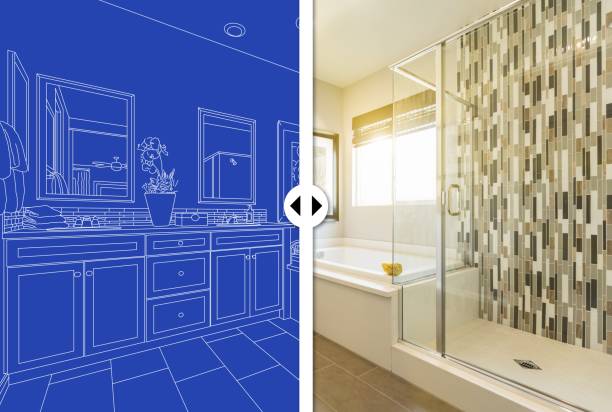
You’ve been staring at that cracked countertop or the bathroom that hasn’t been updated since 1995. You know it’s time to fix things up. But the cash sitting in your bank account isn’t nearly enough. That’s where home equity comes in. Equity is simply the part of your house you actually own, the difference between what your home is worth and what you still owe on your first mortgage. Tapping into that equity for a renovation can make a lot of sense, but only if you pick the right tool. The two most common ways to do it are a home equity loan and a home equity line of credit, better known as a HELOC. They sound similar, but they work in very different ways. Knowing the difference could save you thousands and keep you out of trouble.
A home equity loan is a second mortgage. You get a lump sum of money all at once, and you pay it back in equal monthly payments over a fixed period, usually five to fifteen years. The interest rate is locked in from day one, so your payment never changes. That makes it a rock-solid option if you know exactly what your renovation will cost. Let’s say you’re putting on a new roof. You get quotes, pick a contractor, and the total comes to fifteen thousand dollars. A home equity loan lets you borrow that exact amount, get it in your account, and hand it over when the work is done. No surprises. Every month you write the same check, and after ten years, it’s paid off. That predictability is a huge relief for homeowners who like to plan.
A HELOC is different. You don’t get a lump sum. Instead, you get a line of credit that you can draw from as needed, up to a certain limit, kind of like a credit card. You only pay interest on what you actually use, and the interest rate is usually variable, meaning it can go up or down as the broader market moves. For a long project like a full kitchen remodel that might stretch over several months, this flexibility can be a blessing. You can pay your contractor in phases, borrow a little now, a little more later, and keep your monthly costs lower during the early stages. But there’s a catch. A HELOC typically starts with an interest-only period, often ten years. During that time, you’re just paying the interest, not paying down the balance. That feels great at first, but when the draw period ends, the repayment phase kicks in. Your monthly payment can jump dramatically as you start paying off the principal, all while the interest rate might have climbed higher than what you originally signed up for.
So which one should you choose for your renovation? It really comes down to how predictable your project is. If you have a clear scope of work, firm bids from contractors, and a set timeline, a home equity loan gives you the security of a fixed payment. You’ll never face a surprise bill from your lender. And because the rate is locked, you won’t lose sleep over inflation or Federal Reserve decisions. On the other hand, if your renovation is open-ended, like a major addition where you don’t know exactly what you’ll find behind the walls, a HELOC might be a better fit. You can pull money only when you need it, and if the project goes over budget, you have room to borrow more without re-applying. That flexibility can be a lifesaver when the plumbing turns out to be rotten or the electrical wiring is not up to code.
But here’s the no-nonsense advice you need to hear. Before you borrow a single dollar against your home, make a realistic budget and add a margin of at least ten to twenty percent for surprises. Then ask yourself two questions. Can you comfortably handle the payment if the renovation adds no resale value to your home? And can you still afford your regular life if your income drops or rates go up? Remember, both a home equity loan and a HELOC use your house as collateral. That means if you fail to make the payments, you could lose your home. This isn’t free money. It’s a serious financial move. If you’re doing the renovation because you need to fix something broken, like a leaking roof or a failing furnace, a fixed-rate home equity loan is almost always the safer bet. If you’re remodeling purely for looks, be even more careful. Don’t borrow more than you could pay off within a few years. Equity should be a tool you use wisely, not a piggy bank to empty on a whim. Take your time, compare offers, and choose the option that matches how you plan your money. Your home will thank you, and so will your future self.