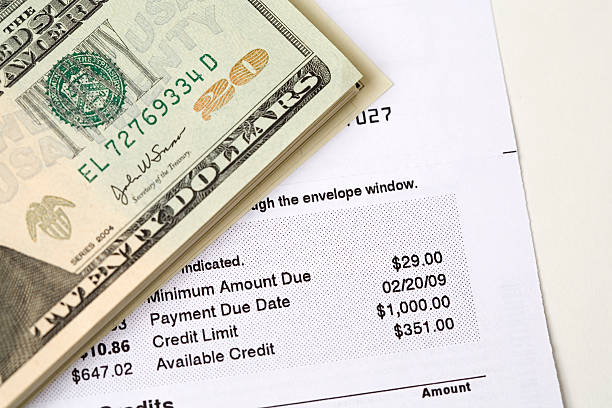
 When you apply for a mortgage, the lender will ask for several documents. One of the most important is your bank statements. You might wonder why they need to see every deposit and withdrawal you have made over the past few months. It can feel like an invasion of privacy, but there is a good reason for it. Lenders are not trying to snoop into your personal spending habits. They are trying to make sure you can afford the monthly payments and that the money you plan to use for the down payment and closing costs actually belongs to you.Your bank statements show where your money comes from. Lenders look for consistent income. If you work a regular job, your paychecks should show up every two weeks or twice a month. The amount should be steady and close to what you reported on your application. If you have side jobs, freelance income, or money from investments, your bank statements help prove that you actually receive that money. Lenders get nervous when they see large deposits that do not come from your employer or from another source they can verify. A random five-thousand dollar deposit from a friend or a family member might raise questions. That money could be a loan that you have to pay back, which would add to your monthly debt. Or it could be a gift, but even then the lender needs to confirm that the giver is willing to let you have the money without expecting repayment. A gift letter is usually required for large deposits from family.Your bank statements also reveal your spending habits. Lenders do not care if you buy coffee every morning or eat out on weekends. What they do care about is whether you have enough money left over after your bills to cover a mortgage payment. They will add up your regular expenses like rent, car payments, credit card minimums, student loans, and other monthly obligations. Then they compare that total to your income. If your bank statements show that you are barely getting by each month, the lender might worry that adding a mortgage payment would push you over the edge. On the other hand, if you have a comfortable cushion and you are able to save money regularly, that is a good sign.Another thing lenders check is your history of overdrafts and bounced checks. If your bank statements show frequent overdraft fees or non-sufficient fund charges, it suggests that you have trouble managing your money. That could be a red flag. A single overdraft here or there is usually not a big deal. But if it happens every few months, the lender might see you as a higher risk. They want to know that you will prioritize your mortgage payment and have enough in the bank to cover it even when unexpected expenses come up.Lenders also look for any signs of large, unexplained cash withdrawals. If you take out several thousand dollars in cash, they will wonder where that money went. It could be for a legitimate reason like buying a used car from a private seller or paying a contractor for home repairs. But the lender cannot assume that. They will likely ask you to explain the withdrawal and provide documentation. This is why it is smart to avoid making any unusual cash transactions during the months leading up to your mortgage application. If you need to move money around, keep it as traceable as possible. A check, a wire transfer, or a debit card payment is better than cash because it leaves a paper trail.Your bank statements also confirm that you have enough money for the down payment and closing costs. Lenders want to see that the funds have been in your account for at least a couple of months. This is called seasoning. If you suddenly deposit a large sum right before you apply, the lender will ask where it came from. You will need to provide proof, such as a copy of a check from a retirement account or a statement from a savings account you closed. If the money is a gift from a family member, you will need that gift letter plus proof that the relative actually has the money to give.Finally, remember that lenders typically ask for the most recent two to three months of bank statements. They want to see all pages, even the ones that are blank. Do not try to hide any accounts. If you have multiple bank accounts, a savings account, a money market account, or even a credit union account, you should provide statements for all of them. Lenders will find out about other accounts anyway through the credit report or other checks. Being upfront saves time and builds trust.In summary, your bank statements are like a financial diary. They show your income, your spending, your savings habits, and your overall financial stability. The lender uses them to decide if you are a safe bet for a loan. The best thing you can do during the mortgage process is to keep your finances steady. Do not make big deposits or withdrawals. Do not open new credit accounts. And do not change your normal spending patterns. That way, when the lender looks at your statements, they will see a reliable person who can handle the responsibility of a mortgage.
Divide the total cost of the points by the amount of monthly payment savings. For example, if points cost $4,000 and save you $80 per month, your break-even point is 50 months ($4,000 / $80 = 50). If you plan to own the home longer than 50 months (about 4 years and 2 months), buying points could be beneficial.
The three primary commission models are:
1. Base Salary + Commission: A lower fixed base salary with a smaller commission rate on funded loan volume.
2. 100% Commission: No base salary; the loan officer earns a higher, pre-negotiated percentage of the loan revenue they generate.
3. Hourly + Bonus: Less common, this involves an hourly wage with bonuses tied to meeting or exceeding loan volume targets.
The risks are substantial for both the borrower and the lender:
For the Borrower: Extremely high interest rates, risk of foreclosure if you cannot keep up with three separate mortgage payments, and potentially damaging your credit score.
For the Lender: High risk of loss if the property is foreclosed, as the proceeds from the sale would go to the first and second mortgages first.
Often, yes. Because renovation loans carry more complexity and perceived risk for the lender (the home is under construction), the interest rate is usually 0.25% to 0.50% higher than a standard 30-year fixed-rate mortgage. However, this can still be more cost-effective than financing renovations with a higher-interest secondary loan.
Yes, jumbo loan refinancing is available. You can refinance to lower your interest rate, change your loan term, or take cash out (though cash-out refinances on jumbo loans have very strict limits and requirements). The qualification process for a jumbo refinance is just as rigorous as for a purchase loan.