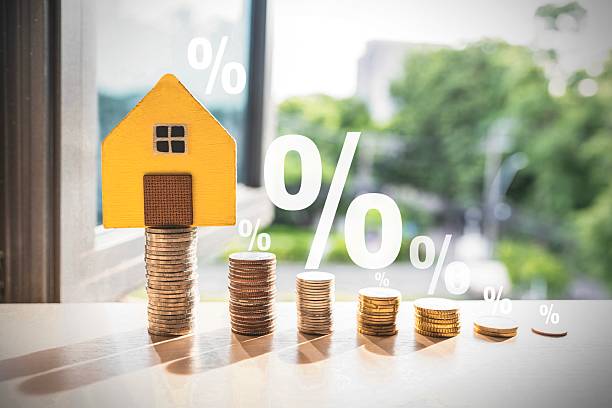
 If you are shopping for a mortgage, you have probably noticed that the loan term—how long you have to pay back the money—has a big impact on the interest rate you are offered. In general, shorter-term loans, like a 15-year fixed mortgage, come with lower interest rates than longer-term loans, like a 30-year fixed mortgage. This is not a coincidence. It comes down to how lenders view risk and how the math works for both you and the bank.When a lender gives you a mortgage, they are taking a chance. They want to be sure you will pay them back, and they also want to earn a profit for taking that risk. A 15-year loan is paid off in half the time of a 30-year loan. That means the lender’s money is at risk for a much shorter period. Over fifteen years, there is less chance that the economy will take a downturn, that your income will change dramatically, or that the housing market will crash. Less time means less uncertainty, and less uncertainty means the lender is willing to charge you a lower rate. On the other hand, a 30-year loan stretches out over three decades. A lot can happen in thirty years—recessions, job changes, even major life events like divorce or health problems. Because the lender is tying up their money for so long, they charge a higher rate to compensate for that extra risk.Another reason shorter-term mortgages have lower rates is that they are often seen as safer for the lender in terms of the loan-to-value ratio. Over fifteen years, you pay down the principal much faster. Your home equity grows quickly. If the housing market drops, you are less likely to end up owing more than your home is worth. That makes the loan less risky for the bank. With a 30-year loan, payments are smaller, so you build equity very slowly. For many years, you might owe almost as much as you borrowed. If home prices fall, you could owe more than the home is worth, which increases the chance of default. Lenders protect themselves from that possibility by charging a higher rate.But the lower rate on a shorter-term loan comes with a trade-off: higher monthly payments. Because you are spreading the same amount of borrowed money over only fifteen years, each monthly payment has to be larger to pay off the loan in time. For example, on a $300,000 loan at a 6% interest rate over 15 years, your monthly payment would be roughly $2,531. On a 30-year loan at a 7% rate, the monthly payment would be about $1,996. That is a difference of over $500 per month. So even though the 15-year rate is lower, you have to be able to afford the larger monthly payment. That is why many homeowners choose the 30-year loan—they can fit it into their budget more easily.However, the lower rate on a shorter term also saves you a tremendous amount of money in total interest over the life of the loan. Using the same example, the total interest paid on the 15-year loan at 6% would be about $155,000. On the 30-year loan at 7%, the total interest would be about $418,000. That is a difference of more than $260,000. So if you can handle the higher monthly payments, a shorter loan term can put tens of thousands of dollars back in your pocket.It is also important to understand that the relationship between rate and term is not a fixed rule. It can vary depending on the market. Sometimes, the difference between a 15-year and a 30-year rate is very small—maybe only half a percent. Other times, the gap can be a full percentage point or more. Economic conditions, inflation expectations, and the demand for different types of loans all play a role. But in general, the pattern holds: shorter term, lower rate.When you are deciding what term to choose, you need to look at your own financial situation. If you have a stable job and a comfortable cushion in your budget, a 15-year mortgage can be a smart way to build wealth faster and pay off your home early. If your budget is tighter or you prefer to have more flexibility each month for other goals like saving for retirement or your kids’ education, a 30-year mortgage might be a better fit. Some homeowners even take the 30-year loan but make extra payments when they can, which effectively shortens the term without locking them into a high monthly obligation.In the end, the relationship between mortgage rates and loan term comes down to a simple idea: less time means less risk for the lender, and less risk means a lower rate. Understanding this trade-off helps you make a choice that works for your family and your future.
Our primary methods are email and phone calls. Email is perfect for sending documents, providing detailed updates, and creating a written record. Phone calls are ideal for complex discussions, answering immediate questions, and ensuring we fully understand your unique situation. We can also utilize secure text messaging for quick, time-sensitive alerts.
Appraisers primarily use the Sales Comparison Approach. They find recently sold properties (“comparables” or “comps”) that are similar in size, location, and features to the subject property. They then make adjustments to the sale prices of these comps based on differences (e.g., an extra bathroom, a smaller lot) to arrive at a supported value for the home being appraised.
An application can be denied for several reasons, including a low credit score, a high Debt-to-Income (DTI) ratio, unstable employment history, an insufficient down payment, issues with the property’s appraisal, or new debt taken on during the application process.
Your credit score is a three-digit number, typically ranging from 300 to 850, that represents your creditworthiness based on your credit history. Lenders use it to assess the risk of lending you money. A higher score signals that you’re a responsible borrower, which directly influences the mortgage interest rate you’re offered. A better rate can save you tens of thousands of dollars over the life of your loan.
While you can put down as little as 3%, aiming for 20% is a common goal to avoid PMI and secure better loan terms. However, your personal financial situation should dictate the amount. It’s often better to put down a manageable amount while keeping ample cash reserves for emergencies, closing costs, and moving expenses.