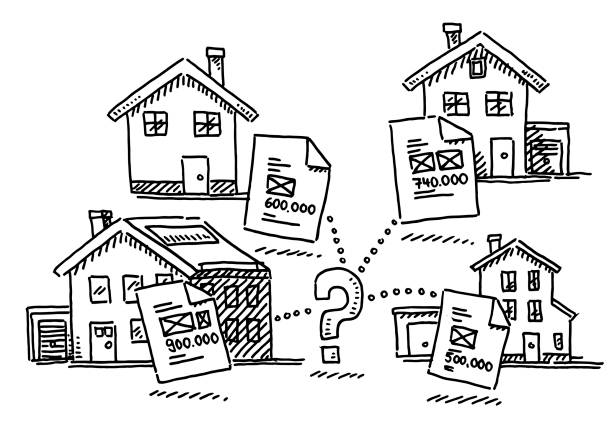


 When you start looking at home loans, you will see two common options: the 15-year mortgage and the 30-year mortgage. These two terms change everything about your monthly payment, the total interest you pay, and how fast you own your home free and clear. The right choice depends on your current income, your future plans, and how much risk you are comfortable taking. Let’s break down the real differences so you can decide which one makes sense for you.The most obvious difference is the monthly payment. A 30-year mortgage spreads the repayment over three decades, which means each payment is smaller. For example, on a $300,000 loan at a 6.5 percent interest rate, the monthly principal and interest payment on a 30-year term would be roughly $1,896. With a 15-year term at the same rate, the payment jumps to about $2,614. That is about $718 more every month. That extra money comes straight out of your household budget, so you must be sure you can afford it without stretching yourself too thin. Many homeowners choose the 30-year term precisely because the lower payment leaves room for other bills, savings, or unexpected expenses.However, the lower monthly payment on a 30-year loan comes at a steep price over time. Because you are borrowing money for twice as long, you pay far more in interest. On that same $300,000 loan at 6.5 percent, the total interest over 30 years would be approximately $382,000. That means you would repay nearly $682,000 for a house that cost $300,000. With the 15-year term, the total interest drops to about $170,000, saving you more than $212,000. That is a huge amount of money that could go toward retirement, college funds, or home improvements. The shorter term also usually comes with a lower interest rate, typically half a percent to a full percent less than a 30-year loan, which adds even more savings.Another key difference is how fast you build equity. Equity is the part of the home you actually own. With a 15-year mortgage, you pay down the principal much faster because a larger chunk of each payment goes toward the loan balance rather than interest. After five years on a 30-year loan, you might own only about 8 percent of the home. On a 15-year loan, you would own nearly 20 percent. That equity gives you financial flexibility. You can use it later for a down payment on another property, a home equity loan for renovations, or as a safety net if you need to sell. If you ever need to move, having more equity means you are less likely to owe more than the house is worth.But the higher monthly payment on a 15-year mortgage can be risky if your income is not stable. If you lose your job or face a medical emergency, that extra $700 or more each month could become a serious burden. With a 30-year mortgage, the lower payment gives you more breathing room. You can always make extra payments when you have extra cash, which shortens the loan and saves interest without locking you into a high mandatory payment. This flexibility is why many financial experts recommend a 30-year loan for people early in their careers or those with variable income, like freelancers or commission-based workers.Your age and long-term plans also matter. If you are in your late forties or fifties, a 15-year mortgage might align with retiring mortgage-free before you stop working. If you are in your twenties or thirties, a 30-year loan can free up cash to invest in the stock market, start a business, or save for children’s education. The lower payment might also allow you to buy a larger home or one in a better neighborhood.Tax implications are worth noting, though the standard deduction recently makes mortgage interest less valuable as a tax write-off for many homeowners. In the past, people favored 30-year loans to keep the interest deduction high, but today that benefit is smaller for most families. Neither term is clearly better from a tax standpoint for the average homeowner.Finally, consider your personality and financial discipline. Some people thrive with the forced savings of a 15-year mortgage because they know they will never skip a payment and will build wealth automatically. Others prefer the freedom to choose how much extra to pay each month, knowing they can always send a larger check when they have a bonus or tax refund. Both approaches work, but one requires strict budgeting and the other requires self-control.The best advice is to run the numbers for your specific loan amount and current interest rates. Compare the monthly payment difference and the total interest over the life of the loan. Ask yourself if you can comfortably afford the higher payment now and for the next fifteen years. If yes, the 15-year mortgage is a powerful wealth-building tool. If not, the 30-year mortgage gives you safety and flexibility. Neither is wrong. What matters is that your choice fits your income, your goals, and your tolerance for risk.
You’ll need to provide recent statements for all outstanding debts, such as credit cards, auto loans, student loans, and personal loans. This helps the lender calculate your debt-to-income ratio (DTI).
No, it is not advisable to use all your savings. You should preserve a separate emergency fund to cover unexpected life events, job loss, or urgent home repairs. A good rule of thumb is to only use a portion of your savings specifically allocated for the home purchase.
Yes, but less than you might think. Since you are making a large principal payment, you will pay less interest over the life of the loan. However, because your monthly payment is subsequently lowered, you are paying down the principal more slowly each month than if you had not recast. The primary interest savings come from the initial lump sum, not the recast itself.
Conforming Loan: A mortgage that meets the loan limits and guidelines set by Fannie Mae and Freddie Mac. These loans often have competitive, standardized rates.
Jumbo Loan: A mortgage that exceeds the conforming loan limits. Because they are larger and considered riskier for lenders, jumbo loans typically have higher interest rates and stricter credit requirements.
An escrow account is held by your mortgage servicer to pay for your property taxes and homeowners insurance on your behalf. You pay a portion of these annual costs with each monthly mortgage payment. The servicer then manages the timely payment of these bills. Your escrow payment is reviewed annually, and your monthly amount may change if your tax or insurance premiums increase or decrease.