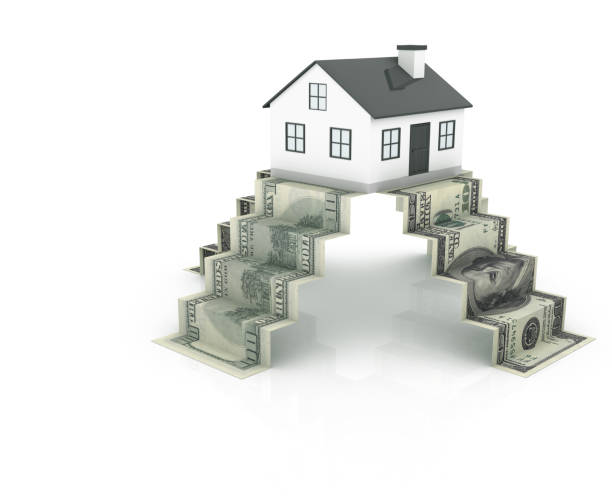
If you’ve been paying on a 30-year mortgage for a few years, you might have started thinking about that 15-year refinance your neighbor keeps mentioning. The idea sounds great on paper: pay off your home in half the time and save tens of thousands of dollars in interest. But before you jump in, you need to look at the whole picture, not just the ending. A shorter mortgage term can be a powerful tool, but it only works if your monthly budget can handle the bigger payment without turning your life into a constant pinch.
Here’s how it usually goes. You buy a house with a 30-year mortgage because that gives you the lowest monthly payment. You get comfortable, maybe even a little too comfortable, with that payment. Then one day you realize you’re paying mostly interest in the early years, and the principal balance barely seems to move. That’s when the 15-year mortgage starts to look like a smarter plan. And it is, if you have the cash flow. When you refinance to a 15-year term, your interest rate often drops by a full point or more because lenders reward shorter loans with lower rates. You also cut your repayment timeline in half, which means you’ll pay far less total interest over the life of the loan.
But here’s the trade-off that many homeowners overlook: your monthly payment will likely jump by 30 to 50 percent. Let’s be real about that. If you’re paying $1,500 a month on a 30-year mortgage, a 15-year refinance might push that payment to $2,100 or more. That extra $600 each month has to come from somewhere. It’s easy to say you’ll cut back on eating out or skip a vacation, but after a few months, real life tends to get in the way. Your car needs tires. Your kid needs braces. Your roof starts leaking. If you’ve squeezed your budget so tight that you can’t handle an unexpected expense, you might end up missing a payment or dipping into savings you were counting on for retirement.
That doesn’t mean a shorter term is a bad idea. It just means you need to be honest with yourself about your income stability and your spending habits. A good rule of thumb is to make sure your new mortgage payment, including taxes and insurance, stays under 28 percent of your gross monthly income. If it doesn’t, you’re setting yourself up for stress. Also, consider where you are in life. If you’re in your late forties or early fifties, a 15-year mortgage might align nicely with your retirement plans. If you’re in your twenties or thirties, that extra money could be better invested in a retirement account, especially if the stock market historically returns more than your mortgage interest rate.
Another thing to think about is the break-even point. Refinancing costs money, usually between 2 and 5 percent of your loan amount. You need to stay in your house long enough to recover that cost through lower interest and a shorter term. If you think you might move in five years, a 15-year refinance probably doesn’t make sense. You’d be better off sticking with your current mortgage and making extra principal payments when you can. That’s the no-nonsense truth.
Speaking of extra payments, here’s a strategy that works for a lot of people who want the benefits of a shorter term without locking into a higher monthly payment. Just keep your 30-year mortgage and pay extra toward the principal every month. You can set up automatic payments that add $100 or $200 to your regular payment. Over time, that extra money goes straight to paying down your balance, which shortens your loan term and reduces total interest. You get the same financial benefit as a 15-year refinance, but you keep the flexibility. If money gets tight, you can pause the extra payments without any penalty.
Of course, a 15-year refinance has one advantage that extra payments don’t: a lower interest rate. If you can get a rate that’s a full point lower than what you’re paying now, that’s a real savings that makes the higher payment more palatable. But you need to run the numbers carefully. Look at your current loan’s remaining balance, your current rate, and your remaining term. Then compare that to a quote for a 15-year loan. Calculate the new monthly payment, the total interest you’d pay, and the closing costs. If the monthly payment fits comfortably into your budget and you plan to stay put for at least seven to ten years, then go for it.
In the end, refinancing to a shorter mortgage term is not about being fancy or following the latest financial trend. It’s about matching your mortgage to your life goals. If you want the peace of mind of owning your home free and clear before you retire, and you have a stable income that can handle the bigger payment, then a 15-year loan is a solid move. But if you’re only doing it because someone told you it’s smart, without checking the impact on your daily cash flow, you might be better off staying put and sending a little extra money each month. The right answer depends on your numbers, your stability, and your plans. Take a deep breath, look at your budget, and decide what works for you. That’s what smart homeowners do.