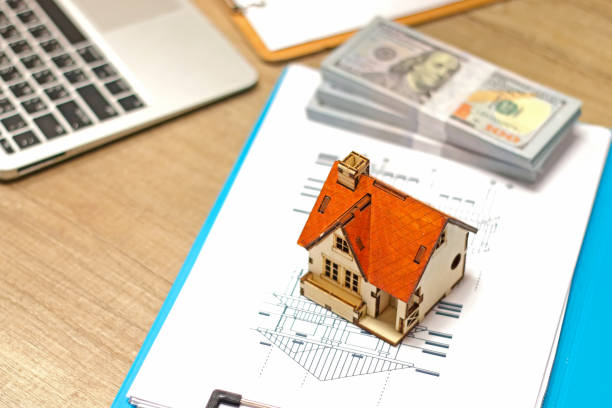
 Many people believe you must put 20 percent down to buy a house. This idea stops plenty of good homeowners from even looking at homes. The truth is much simpler, and knowing it can save you years of waiting and renting. You can buy a home with a lot less money upfront, as long as you understand what that choice means for your monthly payments and overall budget.First, let’s clear up where the 20 percent rule comes from. Lenders like to see a 20 percent down payment because it means you have a big stake in the home. If you put down that much, you also avoid something called private mortgage insurance, or PMI. PMI is an extra monthly cost that protects the lender if you stop making payments. Without the 20 percent down, you usually have to pay PMI until your home equity reaches that 20 percent mark. So the rule is not a law. It is just a way to avoid that extra fee. But for many buyers, paying a smaller down payment plus PMI for a few years is still a better deal than saving for years to hit 20 percent.Consider a typical home that costs $300,000. A 20 percent down payment would be $60,000. That is a lot of cash to save, especially if you are paying rent and other bills. Now look at a 5 percent down payment. That is only $15,000. For a first-time buyer, that difference can mean getting into a home two or three years sooner. Yes, you will pay PMI. On a $300,000 loan with 5 percent down, PMI might cost roughly $150 to $250 per month. That is not pocket change, but it is also not impossible to handle. And once you build up equity to 20 percent, you can ask the lender to remove it. That usually happens after several years of on-time payments.There are also loan programs designed for smaller down payments. FHA loans, backed by the Federal Housing Administration, let you put down as little as 3.5 percent. These loans have their own insurance, called mortgage insurance premium, which you pay upfront and monthly. They can be a good option if your credit score is fair or if you have less money saved. Conventional loans, which are not backed by the government, often allow 3 to 5 percent down for first-time buyers. Many banks and credit unions offer special programs for teachers, nurses, veterans, or people buying in certain neighborhoods. The key is to shop around and ask about low-down-payment options.But here is the real question: how do you decide what down payment is affordable for you? It is not just about the cash you have in the bank. You have to look at your full monthly budget. Every dollar you put into a down payment is a dollar you cannot use for moving expenses, furniture, emergency repairs, or your savings cushion. A common mistake is to drain your savings to hit a higher down payment, only to find yourself short when the water heater breaks or the roof needs a patch. Aim to keep at least three to six months of living expenses in savings after you buy the home.Also consider your monthly housing payment. That includes mortgage principal and interest, property taxes, homeowners insurance, and PMI or any mortgage insurance. A good rule is that your total housing payment should not be more than 28 to 30 percent of your gross monthly income. So if you earn $5,000 per month before taxes, try to keep your payment under $1,500. A smaller down payment means a larger loan, which means higher monthly payments. You need to run the numbers for a few different down payment amounts to see what fits your budget comfortably.Do not forget about closing costs. These are fees for the loan application, appraisal, title search, and other services. They typically add 2 to 5 percent of the home price. You can sometimes roll them into the loan or ask the seller to pay them, but that depends on your market and negotiation. Better to plan for them separately.Finally, think about your future. If you put down less than 20 percent, your monthly payment is higher, but you are also building equity faster because you are paying down the loan. As home values usually rise over time, your equity grows. In five years, you might have enough to refinance into a loan without PMI. On the other hand, if you wait five years to save that 20 percent, home prices might go up, making it even harder to buy. The bottom line is that waiting for the perfect down payment can cost you more than just paying PMI now.So do not let the 20 percent myth scare you off. Look at your savings, your monthly income, your other debts, and your comfort with a higher payment. Talk to a lender and get pre-approved with different down payment amounts. You might discover you can buy a home sooner than you thought. The right down payment is the one that lets you afford the home and still sleep well at night.
When inflation rises, central banks often raise interest rates to combat it. If you have a fixed-rate mortgage, your rate and payment are locked in and will not increase, even if new mortgage rates soar. You are effectively shielded from the impact of rising interest rates in the broader economy.
The most common types are:
FHA 203(k) Loan: Government-backed, popular for major rehabilitations, and allows for a lower down payment.
HomeStyle® Renovation Loan (by Fannie Mae): A conventional loan option for a wide variety of projects, often with competitive interest rates.
CHOICERenovation® Loan (by Freddie Mac): Similar to the HomeStyle loan, offering flexibility for both purchase and refinance scenarios.
VA Renovation Loan: For eligible veterans, active-duty service members, and spouses, allowing them to include renovation costs in their VA mortgage.
Construction-to-Permanent Loan: A single-close loan that finances the land purchase, construction, and then converts to a standard mortgage once the home is built.
Yes, typically they do. Lenders view a 15-year mortgage as less risky because the loan is repaid in a shorter timeframe. This reduced risk is often rewarded with an interest rate that is 0.25% to 0.75% lower than the rate for a comparable 30-year fixed-rate mortgage.
In some cases, yes. You may be able to remove an escrow account if you have a conventional loan and have built up significant equity (often 20% or more), have a strong payment history, and make a formal request with your lender. However, for government-backed loans like FHA and USDA, an escrow account is typically required for the life of the loan. You should always check with your specific lender about their policies.
Discount points are optional fees you pay to lower your interest rate. Origination points are fees charged by the lender to cover the cost of processing and underwriting the loan. Origination points do not lower your interest rate.