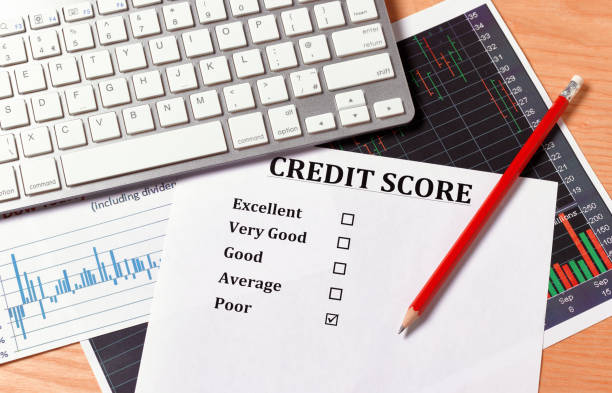
 When you start thinking about buying a home, one of the first things you will hear about is your credit score. Lenders use this three-digit number to decide how much of a risk you are. If you have a high credit score, they trust you to pay back the loan on time. If your score is low, they worry you might miss payments or default. That worry has a direct price tag attached to it. The lower your credit score, the higher your mortgage interest rate will be. And that difference might cost you tens of thousands of dollars over the life of the loan.Let’s look at how this works in plain numbers. Suppose you are taking out a $300,000 mortgage for a thirty-year fixed-rate loan. A borrower with a credit score of 760 or higher might get an interest rate of around 6 percent. Their monthly payment would be roughly $1,799. Now imagine your credit score is 660, which is considered fair but not good. That same lender might offer you a rate of 7 percent. Your monthly payment jumps to about $1,996. That is an extra $197 every single month. Over thirty years, that adds up to more than $70,000 in extra interest. You are paying over seventy thousand dollars just because your credit score was lower.That might sound unfair, but lenders have good reasons. They have studied millions of borrowers. The data shows that people with lower credit scores are more likely to fall behind on payments. To protect themselves, lenders charge higher rates to cover the extra risk. Think of it like car insurance. A driver with a clean record pays less than a driver who has had accidents or tickets. Your credit score is like your driving record for money.So what goes into your credit score? The most common scoring model is the FICO score, which ranges from 300 to 850. The higher the number, the better. The score is made up of five pieces. Payment history is the biggest piece, counting for about 35 percent. That means paying your bills on time is the single most important thing you can do. Next is how much of your available credit you are using, called credit utilization. That counts for about 30 percent. Ideally you want to keep your balances below 30 percent of your credit limits. The length of your credit history makes up 15 percent. Older accounts help your score. New credit and the mix of credit types each count for 10 percent. A mix might include credit cards, a car loan, and a student loan.The difference between credit score tiers is dramatic. A score of 740 or above is generally considered excellent. Borrowers in that range typically get the best rates. A score of 700 to 739 is still good, but you might pay a slightly higher rate. As you move down to 680 to 699, the rate increase becomes noticeable. Below 660, you enter riskier territory. Lenders may charge you a full percentage point or more above the best available rate. For some people with scores under 620, getting a conventional mortgage at all can be difficult. They may need to look at government-backed loans like FHA loans, which have their own rules and costs.The gap between good and poor credit scores has grown wider in recent years. That is partly because mortgage lenders became more cautious after the housing crisis. They now use stricter guidelines. A single late payment on a credit card can drop your score by fifty points or more if you have a thin credit file. And that drop can cost you thousands.If you are planning to buy a home, do not ignore your credit score. Start working on it at least six months before you apply for a mortgage. Check your credit reports for free at AnnualCreditReport.com. Look for errors like accounts that are not yours or old late payments that should have fallen off. Dispute those mistakes. Pay down your credit card balances. Do not open new credit cards or take out new loans in the months before your mortgage application. Lenders get nervous when they see a lot of new credit inquiries. Also, make sure you pay every single bill on time. Set up automatic payments if you need to.Some people think that paying off a collection account will instantly boost their score, but that is not always true. Sometimes paying off a collection removes it from your report, but other times the damage is already done. The best strategy is to avoid collections altogether.Even if your credit score is already good, remember that a small improvement can save you money. Raising your score from 720 to 760 might not change your rate much, but going from 680 to 720 could drop your rate by half a percentage point. On a $300,000 loan, that could save you more than $100 a month.The bottom line is simple: your credit score is one of the biggest factors in determining your mortgage rate. A few extra points on your score can mean keeping thousands of dollars in your pocket instead of giving it to the bank. Take the time to understand your score, fix what you can, and give yourself the best chance at a lower rate. The effort is worth it.
The fundamental difference lies in whether the loan meets the specific guidelines set by the government-sponsored enterprises (GSEs) Fannie Mae and Freddie Mac. A conforming loan “conforms” to these standards, including maximum loan amount, borrower credit score, and debt-to-income ratios. A non-conforming loan does not meet one or more of these criteria and cannot be purchased by Fannie Mae or Freddie Mac.
Yes, you can. By making extra principal payments on a 30-year mortgage, you can effectively pay it off in 15 years (or any other timeframe you choose). This strategy offers the security of a lower required payment if you hit financial hardship, with the ability to accelerate payoff when you have extra funds. You just need to ensure your loan does not have a pre-payment penalty.
Closing costs are the fees and expenses you pay to finalize your mortgage, typically ranging from 2% to 5% of the home’s purchase price. These are separate from your down payment.
The amount you save can be substantial. For example, on a 30-year, $300,000 mortgage at a 4% interest rate, making one extra payment per year could save you over $30,000 in interest and allow you to pay off the loan nearly 5 years early. Use an online mortgage acceleration calculator to see the exact savings for your loan.
A cash-out refinance replaces your primary mortgage with a new, larger one. A home equity loan (or a Home Equity Line of Credit, HELOC) is a second, separate loan that you take out in addition to your existing first mortgage. A cash-out refi often has a lower interest rate, while a HELOC offers more flexible access to funds.