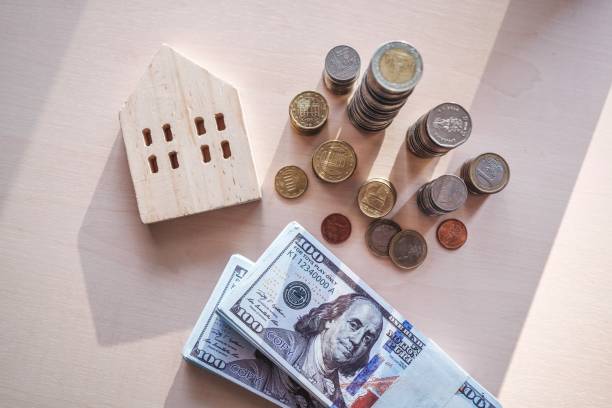
 When you have built up equity in your home, it can feel like a pile of money just sitting there doing nothing. Many homeowners consider taking out a home equity loan or a home equity line of credit to invest that money in stocks, a small business, or even a rental property. The idea is simple: use the cheap money from your house to make more money somewhere else. But this strategy carries serious risks that a lot of people overlook until it is too late.The biggest problem with borrowing against your home to invest is that you are mixing two very different kinds of risk. Your mortgage payment is a fixed obligation. You have to pay it every month no matter what. But investments like stocks or a new business can go up and down. If your investment loses value or doesn’t produce enough income, you still owe the full amount on your home equity loan. You cannot tell the bank, “Sorry, my stock portfolio went down, so I’ll pay you later.” The bank expects its money on time every month, and if you fall behind, you risk foreclosure.Another major risk is timing. The stock market and other investments move in cycles. Maybe you take out a large home equity loan to buy shares when the market is high. If the market drops soon after, you could lose a big chunk of your investment while still owing the full loan amount. This is called negative leverage. Instead of multiplying your gains, borrowing multiplies your losses. If you had used your own cash that was not borrowed, a market drop would hurt, but you would not be in danger of losing your house. With a home equity loan, a bad investment can cost you your home.Small business owners often fall into this trap. They need capital to expand or start a new venture. Using home equity seems like an easy way to get a lower interest rate than a business loan. But businesses are risky. A large percentage of new businesses fail within the first few years. If your business does not take off, you have lost your savings and now owe a big debt secured by your home. You cannot just walk away from that debt the way you might walk away from credit card debt. The bank can take your house.Even if you invest in something that seems safe, like a rental property, there are hidden dangers. Rental properties come with vacancies, repairs, and tenants who might not pay. If your rental sits empty for a few months, you still have to pay the mortgage on your own home plus the loan you took out for the rental. Many people underestimate these costs and end up stretched too thin.Interest rates are another factor to consider. Home equity loans often have variable rates, meaning your payment can go up over time. If you are counting on a certain monthly payment while your investment slowly pays off, a rate increase can eat into your cash flow. If rates rise sharply, you might not be able to afford the loan payment anymore. That forces you to sell the investment at a bad time or worse, sell your home.There is also the emotional side. Your home is more than a financial asset. It is where you live, where your family sleeps. When you tie your home to risky investments, every stock market dip or business slowdown becomes a stress about losing your house. That kind of pressure can lead to bad decisions, like selling an investment at the worst possible moment just to make a loan payment.Lenders do not always warn you about these risks. They look at your home equity and your credit score and say yes to the loan. The paperwork makes it sound like a normal financial tool. But the reality is that using a home as collateral for speculative investing turns your shelter into a gambling chip.If you do decide to go down this path, it is wise to only borrow a small amount that you could still pay back if the investment goes to zero. That is a hard test to pass. Most people who use home equity for investing borrow more than they could afford to lose. They are betting on the investment working out. And sometimes it does. But when it does not, the consequences can be devastating.Instead of borrowing against your home to invest, a safer approach is to build up a separate savings or investment account over time. This way your home stays safe and you are not forced to sell at a bad time. If you already have a lot of home equity and want to put it to work, consider a cash-out refinance that locks in a fixed rate and use the money only for home improvements or paying off high-interest debt. Those uses add value or reduce your monthly bills without the same kind of market risk.Investing is about taking smart risks, not reckless ones. Borrowing against your home for stocks or a business is one of the riskiest moves a homeowner can make. The potential upside is tempting, but the downside can cost you everything. Protect your home first. Make sure any debt you take on is something you can handle even if your investment plan does not work out.
Third mortgages are not offered by traditional banks or major lenders. You will need to seek out private lenders, hard money lenders, or specialized alternative finance companies. Be prepared for rigorous scrutiny and less favorable terms.
The “5” refers to the number of years your initial fixed interest rate will last. The “1” means that after the initial 5-year period, the interest rate can adjust once per year for the remaining life of the loan. Other common structures are 7/1 ARMs and 10/1 ARMs.
To calculate the cost of one point, simply take 1% of your total loan amount. For a $400,000 loan, one point would cost $4,000. The cost of a fraction of a point (e.g., 0.5 points) would be calculated proportionally.
Yes, the most common types are a standard lock (a set rate for a set time), a lock with a float-down option (as described above), and a one-time float option (where you have one opportunity to lock a rate after your application has been submitted).
The loan term (e.g., 15, 20, or 30 years) directly impacts the APR. Because fees are amortized over the life of the loan, a shorter-term loan (like a 15-year mortgage) will often have a higher APR than a 30-year loan with the same fees, as the costs are spread over fewer years.