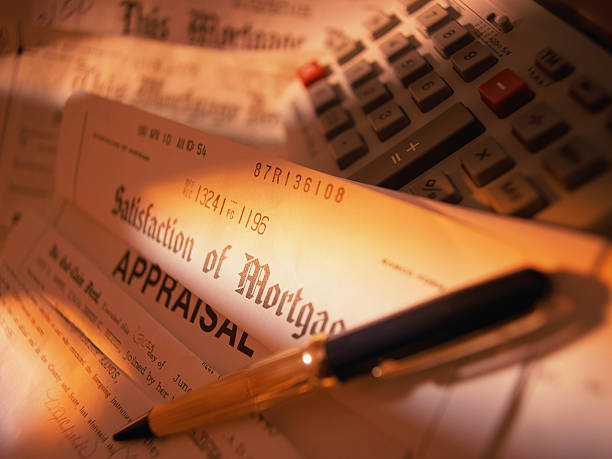
 You have found a house you love, made an offer, and the seller has accepted. Congratulations. But before your lender can approve your mortgage, they need to make sure the house is worth the price you agreed to pay. That is where the property appraisal comes in. An appraiser, a neutral professional hired by the bank, visits the house to inspect it inside and out. They compare it to similar homes that have sold recently in the same neighborhood. Based on that research, the appraiser assigns a fair market value to the property.Most of the time, the appraised value matches the purchase price or comes in a little higher. That is the best outcome. But sometimes the appraisal comes in lower than what you offered. This can be unsettling, but it happens more often than you might think. It does not mean the deal is dead. It just means you and your real estate agent need to figure out what to do next.First, understand why this matters so much to your lender. The bank is not lending you money because you are a nice person. They are lending you money because the house itself is collateral. If you ever stop making payments, the bank can take the house and sell it to get their money back. If the house is worth less than the loan amount, the bank would lose money in a foreclosure sale. So the lender uses the appraised value to decide how much they are willing to lend. Typically, they will lend up to a certain percentage of that value, known as the loan-to-value ratio. For example, if you are putting 20 percent down, the bank will lend 80 percent of the appraised value, not 80 percent of the purchase price.So if you agreed to pay $300,000 for a house but the appraisal says it is only worth $280,000, the bank will base your loan on that $280,000 figure. That means they will lend 80 percent of $280,000, which is $224,000, instead of the $240,000 they would have lent based on the purchase price. You would then be on the hook for the difference. Instead of needing a $60,000 down payment, you would need a $76,000 down payment to cover the full purchase price. That extra $16,000 can be a real gut punch.What can you do? You have a few options, and which one is best depends on your financial situation and how badly you want the house.One common option is to ask the seller to lower the price to match the appraised value. If the seller agrees, you pay the appraised price, your down payment stays the same, and everyone is happy. Sellers do not always go along with this, especially if they have other offers or if they think the appraisal was wrong. But many sellers understand that a low appraisal can scare away other buyers. They might prefer to keep you as a buyer rather than start the entire listing process over again. Your real estate agent can help negotiate this.Another option is to make up the difference in cash. If you have extra savings, you can simply pay the gap between the appraised value and the purchase price as additional down payment beyond what you originally planned. This keeps the deal alive without asking the seller to budge. The downside is you are putting more of your own money into the house, which reduces your immediate cash reserves for moving expenses, repairs, or emergencies.You can also try to challenge the appraisal. The appraiser can make mistakes. Maybe they missed an upgraded kitchen, a new roof, or a finished basement. Maybe the comparable sales they used were not truly similar. Your real estate agent can review the appraisal report and point out errors or missing information. The lender may agree to let the appraiser take a second look, or they might order a new appraisal from a different company. This does not always work, and it takes time. But if you have strong evidence that the appraised value is too low, it is worth trying.Some buyers choose to cancel the purchase altogether. Most purchase contracts have an appraisal contingency. That is a clause that lets you back out if the appraisal comes in low and you cannot reach an agreement with the seller. If you use that clause, you can get your earnest money deposit back and walk away. This might be the right move if the house is overpriced and you do not want to overpay.Finally, you could renegotiate with the lender. Some loan programs, especially FHA and VA loans, have stricter rules about appraisals. But conventional loans sometimes allow you to put less money down if you are willing to pay for private mortgage insurance. You could also consider switching to a different loan product with a higher down payment requirement or a lower purchase price. Talk to your loan officer about your options.The most important thing is not to panic. A low appraisal is a hurdle, not a dead end. Talk to your agent, talk to your lender, and weigh your choices carefully. Buying a house is a big financial decision, and having a professional opinion that the house is worth less than you wanted to pay can actually protect you from overpaying in the long run. Keep a cool head, and you will find a path forward that works for you.
The appraisal is an independent assessment of the home’s market value, ordered by the lender. It ensures the property is worth the loan amount. If the appraisal comes in lower than the purchase price, it can affect the loan-to-value ratio and may require renegotiation with the seller or a larger down payment from you.
Lenders require a title search to protect their financial interest in the property they are financing. They need to be certain that the title is “clear” and marketable, meaning there are no undiscovered claims or liens that could jeopardize their loan collateral. A clean title search is a mandatory condition for closing on most mortgages.
A “no-closing-cost” refinance doesn’t mean the fees disappear; instead, the lender either rolls them into your loan balance (increasing your debt) or offers you a slightly higher interest rate to cover them. This can be a good option if you plan to sell your home before the break-even point of a traditional refinance or if you lack the cash for upfront fees.
When inflation rises, central banks often raise interest rates to combat it. If you have a fixed-rate mortgage, your rate and payment are locked in and will not increase, even if new mortgage rates soar. You are effectively shielded from the impact of rising interest rates in the broader economy.
Your credit score has a direct, inverse relationship with your mortgage rate. Borrowers with higher credit scores are offered lower interest rates because they represent a lower risk of default to the lender. Conversely, borrowers with lower scores are seen as higher risk and are charged higher interest rates to compensate the lender for that increased risk. Even a small difference of 0.25% can significantly impact your monthly payment and total loan cost.