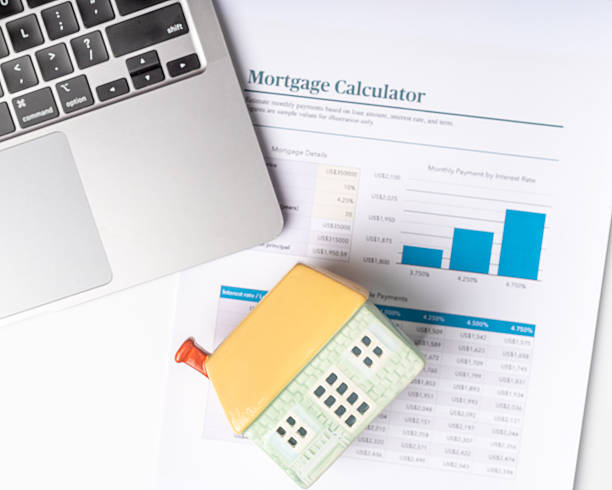
You’ve found the perfect house. You’ve checked the price, imagined your furniture in every room, and even driven past it at different times of day. Then you sit down at your kitchen table, pull up a mortgage calculator on your phone, type in the home price, and let’s say you see a monthly payment around $1,400. That sounds manageable. You can do that. But then you talk to a lender, and suddenly that same house is costing you $1,900 a month. What happened?
The biggest mistake homeowners make with mortgage calculators is trusting the big number on the screen without checking what’s actually included in that number. Many calculators only show principal and interest, meaning the actual loan payoff plus the lender’s cut. They leave out the other three pieces that are just as real: property taxes, homeowners insurance, and possibly private mortgage insurance, or PMI, if your down payment is under twenty percent. A regular homeowner needs to understand that the truth of your monthly payment is not just what you borrowed. It’s what you owe to the county, the insurance company, and the bank for taking on extra risk. If you skip those, you’re looking at a fantasy number.
Let’s break it down without any fancy terms. The principal is the money you borrowed to buy the home. The interest is what the lender charges you for that loan, just like rent for using their money. Those two together are often called the base payment. But your property taxes are a separate bill you owe every year to your local government based on what your home is worth. Lenders usually collect a portion of those taxes every month and hold it in an escrow account, then pay the tax bill for you when it comes due. That money is not optional. Your insurance protects your home against fire, storms, and other damage, and your lender will require you to carry it because your home is the collateral for your loan. Again, you pay that monthly, often through the same escrow account. And PMI is a policy that protects the lender if you stop paying, but only when you put less than twenty percent down. It’s an extra fee that does nothing for you, but you’re stuck with it until you build up enough equity.
A good mortgage calculator will let you enter all of those figures yourself. But here’s the catch: many people don’t know what numbers to put in. They use the asking price of the home, but they might actually pay more or less than that after negotiations. They also forget that property taxes can change. Your county might reassess the home’s value after you buy it, and guess what? That often means a higher tax bill. The calculator from a random website might use a default tax rate that doesn’t match your exact county or school district. That’s like using an average temperature for all of America to decide whether you need a winter coat in Minnesota. It just doesn’t work.
So what should you do? First, don’t use a mortgage calculator to decide your absolute maximum price. Use it as a rough measuring stick, then add at least fifteen percent to whatever monthly number you get, just to cover the reality of taxes and insurance. Better yet, call a local real estate agent or lender and ask them the typical property tax rate for homes in the area you’re looking at. Then find out what homeowners insurance costs for a house of that size and age. Plug that real number into the calculator. That gives you a trustworthy estimate.
Second, don’t forget the one-time costs that the calculator also ignores. A mortgage calculator usually shows ongoing monthly payments, but your down payment, closing costs, and other fees are due on day one. Those can add up to thousands of dollars. If you empty your savings just to scrape together the down payment, you might not have enough left for repairs or an unexpected job loss. A good rule of thumb is to keep at least three months of total expenses in the bank after you close on the house. That’s not a financial advisor’s fancy advice. That’s just common sense. Houses break, water heaters fail, roofs leak. You need a cushion.
Third, use the calculator to think about the long game, not just the monthly payment. The tool you’re using should also show you how much total interest you’ll pay over the life of the loan. A thirty-year mortgage might have a lower monthly payment than a fifteen-year, but you could end up paying double the amount of interest. If you can swing the higher payment, the calculator will help you see the savings. But don’t obsess over paying off your house as fast as possible if that means you can’t save for retirement or handle emergency expenses. A reasonable approach is to compare different term lengths and interest rates side by side. Run the numbers for a 30-year at 6.5% versus a 15-year at 5.5%. Then decide what fits your actual cash flow, not your dreams.
Finally, remember that a mortgage calculator is not a quote. It’s a tool for building a budget before you get serious. The only number that truly matters comes from a lender who pulls your credit, verifies your income, and gives you a loan estimate. That’s the paper you should trust. But you still want to walk into that conversation with a solid idea of what you can afford. For that, a calculator is just fine. Just make sure you feed it the whole truth. Include the taxes, the insurance, the PMI, and even a small margin for the unexpected. Then you’ll get a number that won’t shock you six months down the road. That’s what smart mortgage shopping looks like.